

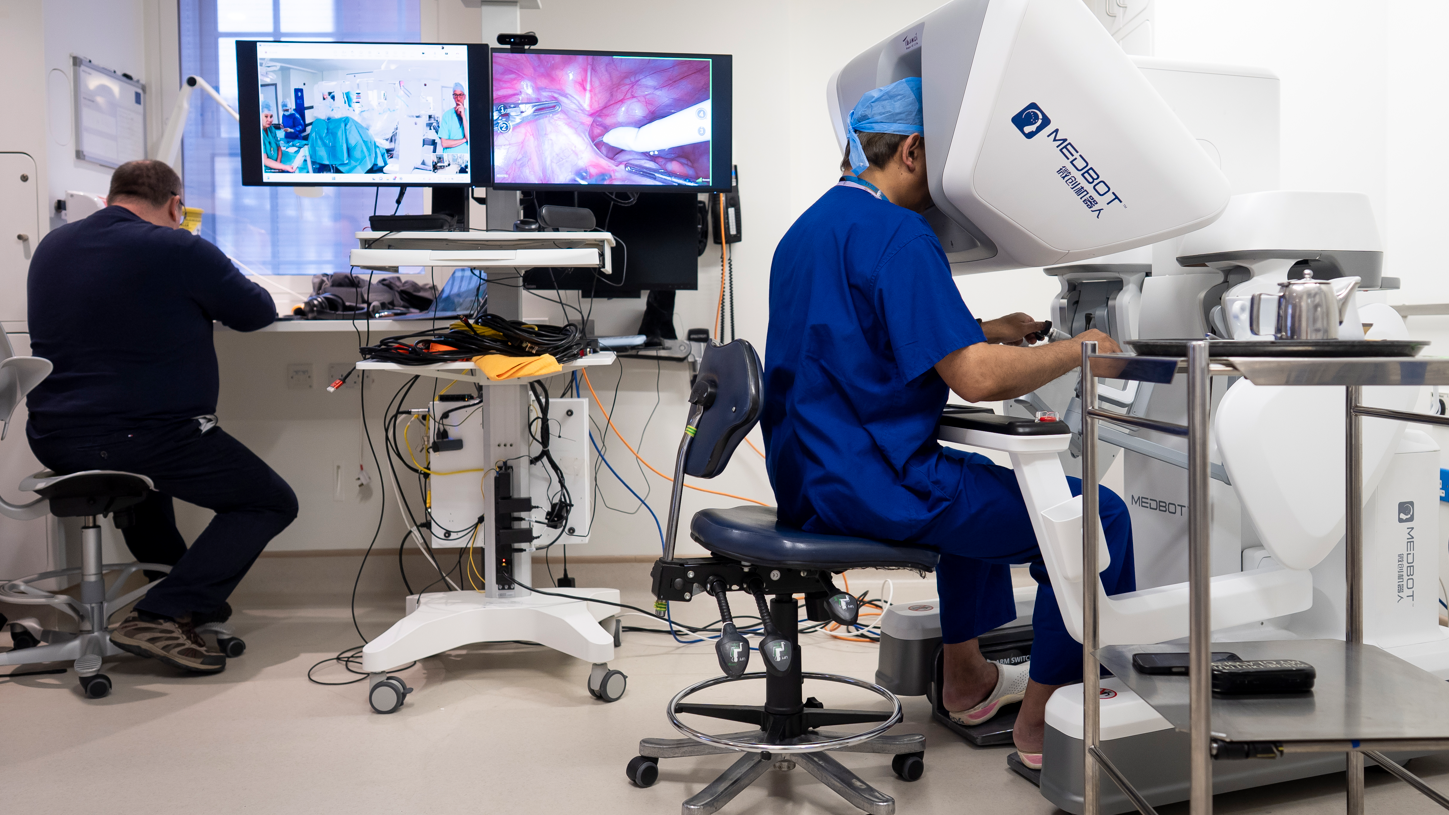
A surgical team at a major NHS teaching hospital has successfully completed the United Kingdom’s first long-distance robotic-assisted operation, in which a consultant surgeon performed a complex abdominal procedure on a patient located more than 200 miles away. The operation, conducted using a next-generation robotic surgical platform connected via a dedicated low-latency fibre-optic network, has been hailed by clinicians, engineers and health policymakers as a milestone in the evolution of the National Health Service.
Advertisement
The procedure, a laparoscopic cholecystectomy — the removal of a gallbladder — was performed by a consultant hepatobiliary surgeon who was seated at a robotic console in London. The patient, a woman in her fifties with a history of gallstones and acute cholecystitis, was on the operating table at a district general hospital in the North of England. Between them, the robotic platform translated the surgeon’s hand movements into precise, tremor-filtered manipulations of miniature instruments inside the patient’s abdomen, with a round-trip latency of less than 20 milliseconds.
The operation lasted approximately 45 minutes and was completed without complications. The patient, who was awake under regional anaesthesia and monitored throughout by a local anaesthetic team, was discharged the following day. In a brief statement released through the hospital, she expressed gratitude to both the surgical team and the engineers who had made the procedure possible. “I was nervous, of course,” she said. “But the team explained everything, and I felt safe. The fact that the surgeon was in London and I was here didn’t really register once it started. It just felt like someone was looking after me.”
The clinical team emphasised that the procedure was not a stunt or a demonstration but a carefully planned, ethically approved and fully regulated surgical intervention. The patient had been selected based on her clinical suitability, and the operation had been rehearsed extensively using simulation software and cadaveric models. A full surgical team, including an assistant surgeon, an anaesthetist and scrub nurses, was present in the operating theatre with the patient, ready to intervene immediately in the unlikely event of a technical failure.
The engineering achievement behind the operation is considerable. The robotic platform, developed by a British medical technology company in partnership with a leading university, incorporates advanced haptic feedback systems that allow the surgeon to “feel” tissue resistance through the robotic instruments, a capability that previous generations of surgical robots lacked. The dedicated network connection, provisioned by a major telecommunications provider, was designed to guarantee the ultra-low latency and jitter-free performance required for real-time surgical control. A backup network path was maintained throughout the procedure, and the system included an automatic fail-safe that would have locked the instruments in place had the connection been interrupted.