

Home Social
Category:

Social

Advertisement

A landmark report published by a consortium of British universities and research institutions has concluded that a comprehensive programme to sequence the DNA of every wild species in the United Kingdom could generate economic benefits of up to £3 billion for rural communities over the next two decades. The figure, which has surprised even the project’s most enthusiastic advocates, reflects not only the direct scientific value of the data but also its potential applications in agriculture, pharmaceuticals, environmental monitoring and eco-tourism.

The proposal, which builds on the success of the Darwin Tree of Life project that has already sequenced the genomes of more than 10,000 British species, would extend the effort to encompass the full breadth of the UK’s biodiversity: every mammal, bird, fish, insect, plant, fungus and microorganism found within the nation’s borders. The total number of species is estimated at approximately 70,000, of which around 50,000 have yet to be genomically characterised.

The economic case rests on several pillars. In agriculture, comprehensive genomic data would accelerate the development of pest-resistant crop varieties, improve livestock breeding programmes and enable more precise soil management through a better understanding of microbial ecosystems. The report estimates that the agricultural applications alone could be worth £800 million over twenty years, with the benefits concentrated in the arable and pastoral regions of East Anglia, the Midlands, the Scottish Borders and the Welsh Marches.

The pharmaceutical potential is equally significant. Britain’s wild flora and fauna represent a vast, largely untapped library of bioactive compounds. The report cites the example of a compound derived from a species of British sea sponge that is currently in preclinical trials as a potential treatment for antibiotic-resistant infections. Comprehensive genomic sequencing would dramatically accelerate the identification and characterisation of such compounds, potentially yielding new drug candidates worth hundreds of millions of pounds.

Environmental monitoring represents a third area of economic value. Genomic data enables the development of environmental DNA, or eDNA, sampling techniques, which allow the presence of species to be detected from traces of genetic material in water, soil or air. This technology is already being used by the Environment Agency to monitor water quality and by Natural England to assess the health of protected habitats. A complete genomic reference library would make these techniques faster, cheaper and more accurate, reducing the cost of environmental compliance for developers and infrastructure projects while improving the quality of ecological data.


Pages: 1 2

Advertisement

In a church hall in Peckham, a group of volunteers is arranging folding chairs, filling plastic cups with water and testing the two portable air-conditioning units donated by a local electrical retailer. In a community centre in Hackney, a retired nurse is taking the blood pressure of an elderly man who walked in from a sheltered housing block where the temperature on the top floor has reached 31 degrees. In a library in Croydon, a teenager is helping an 82-year-old woman video-call her daughter in Glasgow, because the heat has made her too dizzy to hold the phone steady.

These are the cooling centres of London, an ad hoc, largely volunteer-run network that has expanded rapidly in response to the Met Office’s extended amber heat warning. What began as a handful of pilot projects during the extreme heat of 2022 has grown into a citywide infrastructure of more than 150 locations, coordinated by borough councils, charities, faith groups and neighbourhood organisations. They are open to anyone, but their primary purpose is to provide relief to those most at risk: the elderly, the isolated, the chronically ill, the homeless.

The model is simple. A public building — a library, a community centre, a place of worship, a leisure centre — opens its doors during the hottest hours of the day, typically from 10am to 6pm. It provides a cool space, free water, light refreshments and, in many cases, basic health monitoring. Volunteers, often recruited through local charities or council databases, staff the centres, offering conversation, reassurance and a watchful eye for anyone showing signs of heat-related illness.

The growth of the network reflects both the increasing frequency of heat events and the enduring strength of London’s community infrastructure. The capital’s network of churches, mosques, temples, community centres and mutual aid groups, forged over decades of immigration, activism and neighbourliness, has proved remarkably adaptable to the demands of a warming climate. In many boroughs, the same organisations that organised food distribution during the pandemic have pivoted to heat response, drawing on established relationships with vulnerable residents and a deep understanding of local geography.

Pages: 1 2

Advertisement

British Science Week, the annual ten-day celebration of science, technology, engineering and mathematics, has opened registrations for its 2026 edition, and the response from the education sector has been nothing short of extraordinary. More than 12,000 schools across the United Kingdom have signed up to participate, a 30 per cent increase on last year and the highest number since the event was established in its current format in 2015.

The programme, coordinated by the British Science Association with funding from the Department for Science, Innovation and Technology and a consortium of corporate sponsors, provides schools with free activity packs, lesson plans, experiment guides and access to a network of volunteer scientists, engineers and researchers who visit classrooms to demonstrate their work and answer questions. The packs are tailored to different age groups, from early years through to sixth form, and are designed to complement the national curriculum while encouraging the kind of open-ended, inquiry-based learning that formal timetabling often struggles to accommodate.

This year’s theme, “Science in Our Streets,” invites students to explore the science embedded in their immediate environments: the physics of a roundabout, the chemistry of a bakery, the biology of a garden pond, the mathematics of a bus timetable. The theme was chosen deliberately to counter the perception, prevalent among some young people, that science is an abstract, laboratory-bound pursuit disconnected from the texture of everyday life.

The British Science Association’s chief executive noted that the record uptake reflected both a genuine enthusiasm among teachers and a growing recognition of the importance of scientific literacy in a world shaped by climate change, artificial intelligence and public health challenges. “Teachers tell us that their students are hungry for this kind of learning,” the chief executive said. “They want to understand how things work. They want to ask questions and test answers. They want to feel that science is something they can do, not just something they are told about.”

The corporate sponsorship model has been instrumental in scaling the programme. Major pharmaceutical, engineering and technology firms have contributed funding, materials and, crucially, the time of their employees, who volunteer as classroom ambassadors. A leading aerospace company, for example, is sending teams of engineers to schools in the West Country and the North East to run workshops on aerodynamics and materials science. A major supermarket chain is funding food science activities in primary schools, teaching children about nutrition, preservation and the chemistry of cooking.

Pages: 1 2

Advertisement

The National Health Service has published new public health guidance addressing the disproportionate impact of extreme heat on women, drawing on a growing body of clinical evidence that suggests physiological, social and occupational factors combine to make women more vulnerable during heatwave events. The guidance, developed in collaboration with the UK Health Security Agency and the Royal College of Obstetricians and Gynaecologists, represents the first time the NHS has issued sex-specific heat advice at a national level.

The physiological dimension is well documented. Women, on average, have a higher body fat percentage and a lower sweat rate than men, which can impair the body’s ability to dissipate heat through evaporation. Hormonal fluctuations, particularly during the menstrual cycle, pregnancy and menopause, can further affect thermoregulation. Post-menopausal women, who constitute a significant proportion of the over-65 demographic most at risk during heat events, often experience hot flushes that compound the discomfort and physiological stress of external heat.

Pregnant women face particular risks. Elevated core body temperature during pregnancy has been associated with an increased risk of preterm birth, low birth weight and, in extreme cases, stillbirth. The new guidance advises pregnant women to avoid prolonged exposure to temperatures above 30 degrees, to maintain high fluid intake, and to contact their midwife or GP if they experience symptoms of heat stress. Maternity units in the affected regions have been asked to proactively contact women in their third trimester to offer advice and, where necessary, arrange additional monitoring.

The social and occupational dimensions are equally significant. Women are overrepresented in sectors that involve outdoor or physically demanding work in conditions where heat exposure is difficult to mitigate: agriculture, hospitality, cleaning, social care. The guidance notes that women in these roles may be less likely to take breaks or to report symptoms of heat illness, whether due to workplace culture, job insecurity or caring responsibilities that limit their ability to rest.

Caring responsibilities themselves represent a significant risk factor. Women continue to bear the majority of childcare and eldercare duties in British households. During a heatwave, the physical demands of caring for young children or elderly relatives in a hot home, often without adequate ventilation or cooling, can push a woman’s own health to the margins. The guidance explicitly addresses this, encouraging carers to prioritise their own hydration and rest, and to seek support from family, neighbours or local authority services when the burden becomes unmanageable.

Pages: 1 2

Advertisement

The Met Office has extended its amber weather warning for heat across much of South East England through the end of the week, as a persistent high-pressure system continues to draw warm air northward from the continent. Temperatures in parts of Kent, Sussex, Surrey and Greater London are expected to reach 34 degrees Celsius by Thursday afternoon, with overnight lows remaining above 18 degrees in urban areas, offering little respite for those without air conditioning.

The amber alert, the second-highest tier in the Met Office’s warning system, indicates that the heat is likely to have a significant impact on health, transport and infrastructure. The UK Health Security Agency has issued parallel guidance, urging vulnerable groups — the elderly, young children, those with chronic respiratory or cardiovascular conditions, and people taking certain medications — to take particular precautions.

For most healthy adults, the heat is an inconvenience rather than a danger. But for the estimated four million Britons aged 75 and over, many of whom live alone in poorly insulated housing, prolonged heat poses a genuine risk. The NHS has activated its heatwave plan, with hospitals and GP surgeries in the affected regions stepping up outreach to vulnerable patients. Ambulance services have reported a modest increase in call-outs related to dehydration and heat exhaustion, though nothing approaching the levels seen during the extreme heat events of 2022.

Local authorities have responded with a mixture of practical measures and public information campaigns. Several London boroughs have opened cooling centres in libraries, community halls and leisure centres, offering air-conditioned spaces, free water and a place to rest during the hottest hours of the day. The centres have been particularly well used by older residents, many of whom have reported feeling isolated and anxious during previous heat events.

Transport operators have issued their own advisories. Network Rail has imposed temporary speed restrictions on some lines, as steel rails can expand and buckle in sustained heat. Several train operators have advised passengers to carry water and to expect possible delays, particularly on routes through the South East. The London Underground, much of which runs in unventilated Victorian tunnels, has experienced platform temperatures exceeding 35 degrees, prompting Transport for London to distribute free water bottles at the busiest stations.

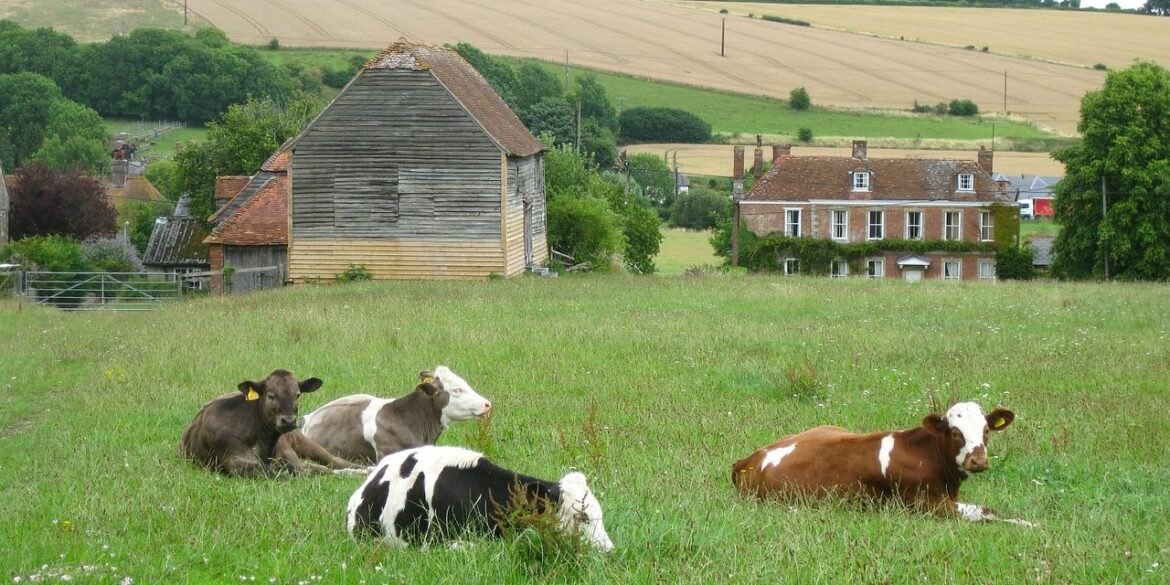
The agricultural sector is also feeling the strain. The National Farmers’ Union has reported that livestock farmers in the affected regions are implementing additional welfare measures, including increased water provision, shade structures and adjusted feeding schedules to avoid the hottest parts of the day. Arable farmers, meanwhile, are watching their crops with increasing anxiety, as the lack of significant rainfall over the past three weeks has begun to stress cereal and vegetable plantings.

Pages: 1 2

Advertisement

logo-white

Magnum News
[email protected]

+447876684692

Disclaimer

The content published on this website is provided for general informational purposes only. While we strive to deliver accurate and up-to-date information, we make no representations or warranties of any kind, express or implied, about the completeness, accuracy, reliability, or availability of the articles, opinions, or other materials contained on this website. Any reliance you place on such information is strictly at your own risk. Nothing on this website constitutes professional, medical, legal, financial, or investment advice. Always consult a qualified professional before making decisions based on information found here.

Editors' Picks

Latest Posts