

Home Author
Author

Seward Checkley

Advertisement

Sir Jim Ratcliffe has spent much of his career building businesses away from the daily attention of the British public.

Manchester United changed that.

Since the billionaire founder of INEOS acquired a major minority stake in one of the world’s most famous football clubs and assumed responsibility for its football operations, decisions carrying his name have been examined in extraordinary detail.

Managers. Players. Jobs. Spending. Old Trafford. Ticket prices. The future of the club itself.

And behind many of those individual controversies sits a question familiar to journalists such as Laura Kuenssberg:

What happens when enormous power is concentrated in the hands of a small number of people — and their decisions begin affecting institutions millions consider their own?

For Ratcliffe, that question has become increasingly difficult to escape.

Ratcliffe Did Not Buy an Ordinary Business

Manchester United may technically be a company, but supporters have never treated it like one.

It is an institution built over generations.

When Ratcliffe’s investment was completed in February 2024, he spoke openly about restoring a club that had failed to win the Premier League since Sir Alex Ferguson’s departure in 2013.

He acknowledged that something was wrong with the environment at United and urged patience, saying the club needed to move carefully towards the right solutions rather than rush towards the wrong ones.

The ambition was enormous.

So were expectations.

For supporters frustrated by years of underperformance under the Glazer family’s ownership, Ratcliffe initially represented the possibility of fundamental change.

But changing Manchester United has proved considerably more complicated than buying into it.

The Decisions Quickly Became Painful

Ratcliffe’s arrival was followed by an aggressive attempt to reduce costs and restructure the organisation.

Jobs were cut.

Long-established practices were reconsidered.

Departments were reorganised.

The argument from the new leadership was essentially that Manchester United had become inefficient and needed to operate very differently if it wanted to compete again at the highest level.

For a businessman accustomed to restructuring industrial companies, there was a certain logic to the approach.

But football creates a problem that conventional businesses do not.

Every decision has an audience.

And that audience cares deeply.

A spreadsheet may identify an expense.

A supporter may see a tradition.

An executive may see restructuring.

An employee may see the end of a career.

That tension has followed Ratcliffe throughout his attempt to rebuild United.

Even the Future of Old Trafford Became Part of the Debate

Then there is the stadium.

Old Trafford is one of the most recognisable football grounds in the world, but its ageing infrastructure has become symbolic of Manchester United’s broader decline.

Ratcliffe has been willing to think much bigger than simply repairing it.

From the early stages of his involvement, he discussed the possibility of creating a major new stadium capable of serving not merely Manchester United but the wider north of England.

The idea demonstrated the scale of his ambition.

It also raised another question.

How much should private ambition depend upon public support?

Major stadium and regeneration projects inevitably involve transport, infrastructure, planning authorities and potentially government participation.

At that point, a football story starts becoming a political one.

This Is Where Laura Kuenssberg’s World Meets Ratcliffe’s

Laura Kuenssberg has spent years interviewing the people responsible for Britain’s biggest political decisions.

Prime ministers, ministers and opposition leaders are routinely confronted with questions about responsibility, money and power.

Ratcliffe operates in a different arena.

He is not an elected politician.

But Britain’s most powerful business figures increasingly make decisions capable of producing consequences that resemble political ones.

They employ thousands of people.

They control culturally important institutions.

They influence investment.

And their decisions can transform communities.

Manchester United makes that dynamic particularly visible.

The club’s supporters do not vote for Ratcliffe.

Yet decisions made by Ratcliffe and the executives around him can affect an institution that forms part of the identity of Manchester and commands a global following numbering in the hundreds of millions.

That creates a strange form of accountability.

Ratcliffe Has Never Hidden His Philosophy

One thing has remained consistent throughout his involvement with United: Ratcliffe has repeatedly presented himself as someone interested in long-term structural change rather than quick reactions.

That became particularly clear when questions surrounded the future of manager Ruben Amorim.

Ratcliffe publicly argued against running the club through “knee-jerk” decisions and indicated that Amorim needed significant time to demonstrate whether he could succeed.

It was consistent with the message Ratcliffe had delivered when his investment was first completed.

Manchester United’s problems had accumulated over many years.

He did not believe they could be repaired overnight.

But patience becomes harder to sell when results fail to meet expectations.

The Billionaire Problem

There is also a broader reason Ratcliffe attracts attention.

Britain has an increasingly complicated relationship with billionaires.

Successful entrepreneurs can create enormous companies, employment and investment.

At the same time, the influence accumulated through that wealth creates legitimate questions about accountability.

Ratcliffe embodies both sides of that argument.

INEOS grew into an enormous international industrial group.

His business career made him one of Britain’s most prominent entrepreneurs.

That same wealth eventually allowed him to acquire a powerful position inside Manchester United.

For supporters, however, the size of his fortune is largely irrelevant.

They judge him by something much simpler:

Is Manchester United getting better?

That Question Has Become Impossible to Avoid

This is ultimately why the Ratcliffe story extends beyond football.

When a billionaire takes control of something people feel belongs partly to them culturally, conventional ideas about ownership become complicated.

Legally, supporters do not own Manchester United.

Emotionally, many believe they do.

Ratcliffe therefore occupies an unusual position.

He has the authority to make decisions.

Supporters have the ability to judge those decisions publicly.

Journalists have the ability to question them.

And politicians can become involved whenever the consequences extend beyond the boundaries of Old Trafford.

It creates precisely the kind of intersection between money, power and accountability that dominates Britain’s wider public debate.

Laura Kuenssberg Represents the Other Side of That Equation

Kuenssberg’s career has largely been built around questioning people with power.

The individual sitting opposite the interviewer changes.

The underlying principle does not.

Why was this decision made?

Who benefits?

Who pays?

What happens if it fails?

And who ultimately takes responsibility?

Those questions apply just as naturally to Britain’s corporate leaders as they do to its politicians.

Ratcliffe’s transformation of Manchester United provides an unusually visible example.

Every major decision can be measured.

Every promise can eventually be compared with reality.

And millions of supporters are watching.

Ratcliffe’s Legacy at United Is Still Unfinished

It is far too early to know how history will judge Jim Ratcliffe’s involvement with Manchester United.

His original ambition was unmistakable: restore one of football’s greatest institutions to the level it once occupied.

Achieving it requires considerably more than money.

United need sporting stability, intelligent recruitment, better infrastructure and an organisation capable of competing with clubs that spent years modernising while Old Trafford fell behind.

Ratcliffe knew the scale of that challenge when he arrived.

What he could not control was how closely every step would be examined.

That may ultimately become the defining feature of his Manchester United experiment.

A businessman who spent decades building an empire is now trying to rebuild something millions of people believe is more important than any ordinary company.

And in modern Britain, people with that much influence rarely get to make their biggest decisions without somebody asking difficult questions.

That is where the worlds of Jim Ratcliffe and Laura Kuenssberg ultimately meet — not through a fabricated television confrontation, but through the much bigger British argument about power, responsibility and who gets to demand answers.

Для креатива я бы здесь особенно рассматривал “Jim Ratcliffe Is Facing Questions Few Expected When He Took Control”, “The Questions Surrounding Jim Ratcliffe Are Getting Harder to Ignore” или вариант с обоими именами: “Jim Ratcliffe & Laura Kuenssberg: The Question of Power Britain Can No Longer Ignore.”
Advertisement

For Prince Harry, the past few weeks have brought the kind of developments that could define the next chapter of his life.

Six years after stepping away from royal duties and building a new home in California, the Duke of Sussex is preparing for a major change.

Harry, Meghan and their two children are expected to return to Britain, bringing the family back to the country they left in 2020.

But the surprising development comes at an unusually difficult moment for the prince.

Only weeks earlier, Harry suffered a major defeat in his long-running legal battle with the British press. Now a new court order has added a potentially substantial financial consequence to that loss.

A Court Battle That Became Deeply Personal

Harry’s confrontation with Britain’s tabloid press has lasted for years.

He has repeatedly argued that aggressive media practices caused enormous damage to his private life and contributed to his decision to leave Britain with Meghan.

The prince has also linked his attitude towards the press to the experiences of his mother, Princess Diana.

This year, one of the most significant remaining battles finally reached London’s High Court.

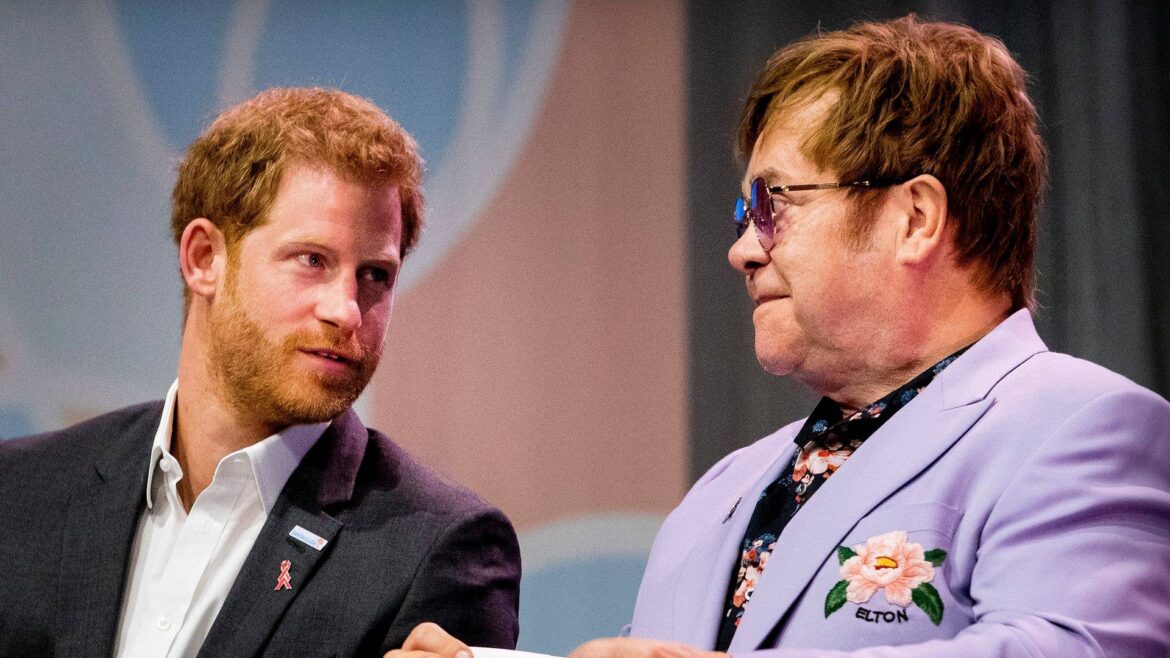
Harry joined Elton John and five other prominent claimants in bringing privacy cases against Associated Newspapers, publisher of the Daily Mail and Mail on Sunday.

They alleged that unlawful methods had been used to obtain private information.

Associated Newspapers strongly denied wrongdoing.

Harry Took the Stand

The case produced one of its most striking moments in January.

Harry personally gave evidence in the High Court, only the second time he had entered the witness box in his long-running campaign against British newspaper publishers.

At one stage, the prince became emotional while discussing the effect that press coverage had had on Meghan.

He told the court that the situation had made his wife’s life extremely difficult.

For Harry, the proceedings appeared to represent considerably more than a conventional dispute over privacy.

They were part of a confrontation with sections of the British media that had shaped much of his adult life.

Then Came the Decision

On July 7, the High Court dismissed the claims.

Judge Matthew Nicklin rejected the case brought by Harry and the other claimants against Associated Newspapers.

It was a significant reversal for a prince who had previously secured victories and settlements in other legal actions involving British newspaper groups.

Harry strongly disagreed with the outcome, describing the judgment as a “whitewash”.

But the consequences did not end with the defeat itself.

A £9.54 Million Order Followed

On August 21, another decision arrived.

The court ordered Harry, Elton John and the other unsuccessful claimants to make an interim payment of £9.54 million towards Associated Newspapers’ legal costs.

The payment was ordered to be made by August 28.

The final financial consequences could be greater.

The court previously heard that Associated Newspapers’ legal bill amounted to approximately £34.5 million, while the claimants had insurance coverage of £16 million.

The precise amount ultimately recoverable has yet to be determined.

Judge Nicklin was also highly critical of aspects of the way the claimants had conducted the case, saying that serious allegations had rested on speculative and inferential foundations.

It turned an already significant courtroom defeat into an even more difficult result.

And Then Britain Learned Harry Was Coming Back

Against that backdrop came an entirely different development.

Harry and Meghan are planning to move back to Britain with Prince Archie and Princess Lilibet, six years after relocating to North America.

The children are expected to attend school in the UK, although Harry and Meghan will remain non-working members of the Royal Family and are not expected to live on a royal estate.

The timing makes the decision particularly striking.

Harry left Britain amid intense dissatisfaction with media attention, disagreements over security and growing tensions within the Royal Family.

Now he is preparing to return to the same country while many of those issues remain unresolved.

The Royal Question Has Not Disappeared Either

Returning to Britain inevitably raises another question: what happens to Harry’s relationship with his family?

His relationship with Prince William has remained particularly strained following years of public disagreements and revelations about royal life.

Relations with King Charles have shown some signs of improvement, although a complete reconciliation within the family should not be assumed.

Harry’s return therefore does not automatically mean a return to the life he had before 2020.

He and Meghan will be returning as private individuals rather than working royals.

That distinction could determine how their new life in Britain develops.

A Very Different Prince Harry Is Returning

The Harry who left Britain in 2020 was still adjusting to a dramatic break from royal life.

The man returning has spent six years building a different public identity.

He has published a memoir, produced television projects, pursued multiple legal cases and spoken publicly about subjects that would once have remained behind palace walls.

Some of his legal battles produced victories.

Others did not.

The latest Daily Mail judgment represents one of his most significant defeats.

Yet almost simultaneously, Harry is making a decision that few would have predicted several years ago.

He is coming home.

The Next Chapter May Be the Most Difficult One Yet

There is no evidence that Prince Harry is returning to royal duties.

Nor does moving back to Britain erase the disputes involving his family, security or the press.

What it does represent is another major change in a life that has rarely remained static for long.

Within a matter of weeks, Harry has lost his final outstanding legal battle against the British press, faced the prospect of millions of pounds in legal costs and prepared to relocate his family across the Atlantic.

Each development would have generated headlines on its own.

Together, they leave Prince Harry entering one of the most consequential periods since he and Meghan walked away from royal duties six years ago.

This time, however, the story is unfolding back in Britain.

Advertisement

For the England national team, this evening was supposed to be another step towards the match the country has been waiting for for decades.

Instead, the 2026 World Cup semi-final against Argentina ended in one of the most heartbreaking moments of the tournament for the English players and their supporters.

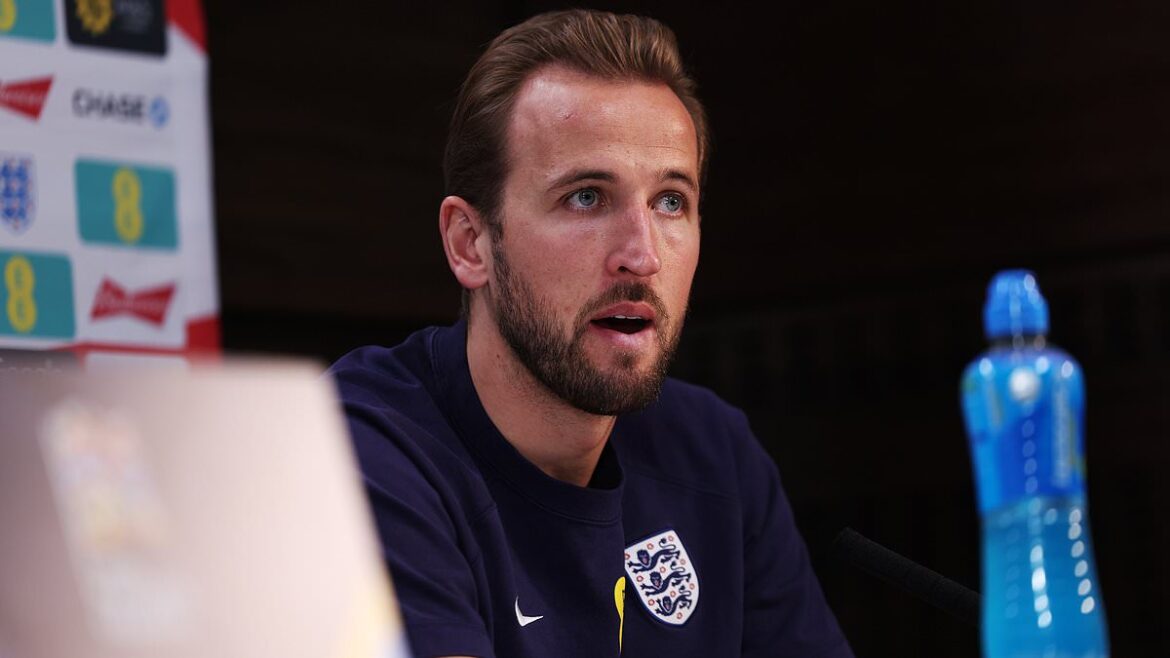
Shortly after the final whistle, England captain Harry Kane appeared before the cameras.

His words were brutally honest.

England were leading 1–0 and were on the brink of the final, but conceded twice and lost 1–2. Kane admitted that, after scoring, the team had focused too much on trying to hold onto their lead.

“At this level, that’s not enough,” said the captain after the match.

It was precisely this admission that sparked a new debate surrounding the national team.

What Happened in the Semi-Final

For most of the match, England did indeed remain in contention.

After Anthony Gordon’s goal, Thomas Tuchel’s side took the lead and had the chance to reach the World Cup final for the first time since 1966.

But the nature of the match gradually changed.

Argentina stepped up the pressure, Enzo Fernández equalised, and Lautaro Martínez scored the decisive goal in stoppage time.

For the English players, this meant yet another semi-final and yet another missed opportunity.

Kane’s reaction after the match summed up the team’s mood perfectly.

He spoke of the sheer effort the players had put into the tournament and admitted he was devastated by the result.

But Another Debate Was Already Raging Around Kane

For the England captain, the World Cup itself turned out to be packed with more than just footballing events.

Shortly before the quarter-final, Kane confirmed an unusual story that Donald Trump had previously recounted publicly: the footballer had indeed played golf with him.

Kane described the experience as “surreal” and spoke highly of the US president’s game.

Following the publication of his comments, there was a noticeable negative reaction on British social media.

Thus, even before the decisive matches, the captain found himself in the spotlight far beyond the football pitch.

Questions Then Arose Within the Squad

Another story emerged following England’s victory over Norway in the quarter-finals.

Despite the 2–1 result, Thomas Tuchel publicly criticised the quality of the team’s performance. Jude Bellingham’s reaction to the manager’s comments fuelled speculation about a possible rift within the squad.

Once again, it fell to Kane to answer the questions.

The captain dismissed reports of a rift and stated that Bellingham’s reaction following an emotional match had been over-interpreted. He also publicly backed Tuchel and emphasised the team’s unity.

After the Defeat, Kane Spoke to the Cameras Once Again

That is precisely why his post-match interview following the Argentina game attracted particular attention.

Kane did not try to portray the defeat as the result of a single unfortunate incident.

He acknowledged that, after taking the lead, England allowed their opponents to seize the initiative and found themselves under virtually constant pressure.

However, the captain refused to write the team off.

In his view, England had once again proved that they are capable of reaching the later stages of major tournaments, but they still need to find that missing element that will allow them to take that final step.

What Lies Ahead for Harry Kane

After the tournament, another obvious question arose: was this Kane’s last chance to win the World Cup?

The footballer’s response turned out to be more interesting than many had expected.

On 20 July, Kane stated that he had not ruled out taking part in another World Cup. At the same time, he expressed his support for Thomas Tuchel and spoke highly of the atmosphere the manager had created within the squad.

Therefore, one can only speak of a ‘sad day’ in relation to England’s dramatic defeat, but not to the end of Kane’s career.

On the contrary, the captain made it clear that this story may yet have a sequel.

Following the semi-final defeat, he acknowledged the team’s mistakes, publicly backed the manager and left the door open for another attempt at the World Cup.

That is precisely why Harry Kane’s final words sparked such interest: after one of the toughest evenings of his international career, the England captain spoke not of retirement, but of the fact that the team is still trying to find that final step separating them from football’s top trophy.

Of your headlines, “Harry Kane’s words spread like wildfire across Britain” can quite naturally be linked to this article. However, I wouldn’t use “scandal”, “utter chaos” and “the British are demanding explanations” literally: the sources I’ve found do not corroborate this.

Advertisement

In a laboratory on the Wellcome Genome Campus outside Cambridge, a technician places a small tissue sample into a sequencing machine no larger than a desktop printer. The sample is from a common British earthworm, Lumbricus terrestris, an animal that has been turning the soil of these islands since the last Ice Age. Within hours, the machine will have read the worm’s entire genetic code, all 130 million base pairs of it, and uploaded the data to a publicly accessible database. It is a small act, easily overlooked. But multiplied by 70,000, it becomes one of the most ambitious scientific projects ever undertaken in Britain.

The Genomic Britain programme, a collaboration between the Wellcome Sanger Institute, the Natural History Museum, the Royal Botanic Gardens at Kew and a consortium of universities, aims to sequence the complete genome of every wild species found in the United Kingdom. The project, which builds on the pioneering Darwin Tree of Life initiative, has received £200 million in initial funding from the government’s Life Sciences Sector Plan and an additional £100 million from charitable and private sources. The target is to complete the sequencing within ten years, creating a comprehensive genetic reference library for British biodiversity.

The scale of the undertaking is difficult to comprehend. The UK is home to approximately 70,000 species of animals, plants, fungi and protists. Of these, around 20,000 have been genomically characterised to some degree, but the vast majority remain unread. The programme will require the collection, preservation and analysis of tissue samples from every species, a logistical challenge that involves field biologists, museum curators, citizen scientists and an army of volunteers criss-crossing the country from the chalk downs of Sussex to the peat bogs of Caithness.

The scientific value of the project is immense. A complete genomic library would transform the study of British ecology, enabling researchers to understand the genetic basis of adaptation, to trace the evolutionary relationships between species, to identify populations at risk of inbreeding and genetic decline, and to develop more effective conservation strategies. It would also provide the reference data needed for environmental DNA sampling, a technique that allows the presence of species to be detected from traces of genetic material in water, soil or air, revolutionising the monitoring of biodiversity.

The economic case, as outlined in a report published alongside the programme’s launch, is equally compelling. The authors estimate that the genomic library could generate up to £3 billion in economic value over twenty years, through applications in agriculture, pharmaceuticals, environmental management and biotechnology. The agricultural applications include the development of pest-resistant crop varieties informed by the genomic data of wild relatives, the improvement of soil health through a better understanding of microbial communities, and the breeding of livestock with enhanced disease resistance.

Pages: 1 2

Advertisement

The government has unveiled the most significant reform of the UK’s research funding architecture in a generation, proposing a restructuring of UK Research and Innovation, the body that distributes more than £8 billion in public research funding annually, and introducing a new framework for setting strategic priorities that aims to align scientific investment more closely with economic and social outcomes. The proposals, published in a white paper by the Department for Science, Innovation and Technology, have been met with a mixture of cautious optimism and institutional anxiety from the research community.

The central plank of the reform is the creation of a new Strategic Research Council, which will sit alongside the existing research councils and be responsible for identifying and funding large-scale, mission-oriented research programmes in areas of national priority. The initial missions, as outlined in the white paper, include clean energy, healthy ageing, artificial intelligence and advanced manufacturing. Each mission will be allocated a multi-year budget, insulated from the annual spending review cycle, and will be governed by a board comprising senior academics, industry leaders and public sector representatives.

The existing research councils — the bodies that fund discipline-specific research in areas ranging as the Medical Research Council, the Engineering and Physical Sciences Research Council and the Arts and Humanities Research Council — will retain their identities and their peer-review processes, but will be required to demonstrate how their funding portfolios contribute to the broader strategic missions. The intention, according to the white paper, is not to abolish curiosity-driven research but to ensure that it exists within a framework that connects it to the nation’s economic and social needs.

The reaction from the scientific community has been nuanced. The president of the Royal Society welcomed the commitment to multi-year funding and the recognition of research as an economic driver, but cautioned against an overly instrumentalist approach. “The history of science is full of discoveries that were made without any intention of economic application and that turned out to be transformative,” the president said. “Penicillin. The structure of DNA. The World Wide Web. None of these was the product of a mission. They were the product of curiosity, supported by patient, undirected funding. We must protect that space.”

The vice-chancellors of the Russell Group universities expressed similar concerns, while acknowledging the need for reform. The chair of the group noted that the current system, while imperfect, had produced world-leading research across a broad range of disciplines, and that any restructuring must avoid the concentration of funding in a narrow set of applied priorities at the expense of the humanities, social sciences and fundamental physical sciences. “The economy needs engineers and medics,” the chair said. “But it also needs historians, linguists, philosophers and sociologists. A society that funds only what it can immediately monetise is a society that has misunderstood the nature of knowledge.”

The business community, by contrast, has been broadly enthusiastic. The Confederation of British Industry described the reforms as “a step in the right direction,” noting that British industry had long struggled to access and exploit the country’s academic research base. The director of a leading technology trade body welcomed the emphasis on mission-oriented funding, arguing that it would provide the “direction and scale” that private investors needed to commit capital to long-term research and development.

The political dimension is significant. The reforms are explicitly linked to the government’s broader economic strategy, which positions science and innovation as the primary drivers of productivity growth and regional rebalancing. The Prime Minister, in a foreword to the white paper, described research funding as “not a cost but an investment, and not a luxury but a necessity.” The Opposition, while supportive of the broad direction, has questioned the pace of implementation and the adequacy of the transitional funding arrangements for existing research projects.

Pages: 1 2

Advertisement

The corridor of land stretching between Oxford, Cambridge and London, long known as the “Golden Triangle” of British science, is undergoing a transformation that even its most optimistic advocates could not have predicted five years ago. The life sciences sector plan, published by the government in the summer of 2025, has catalysed an investment boom that is reshaping the physical, economic and intellectual landscape of the region, with £3 billion in combined public and private funding committed in the first twelve months alone.

The Golden Triangle is not a new phenomenon. Oxford and Cambridge have been centres of scientific inquiry for centuries, and London’s cluster of teaching hospitals, research institutes and pharmaceutical headquarters has been a global force in biomedical science since the post-war era. What is new is the scale and coordination of the investment, and the explicit policy intention to translate the region’s research excellence into commercial output, manufacturing capacity and high-skilled employment.

In Oxford, the expansion is visible in the cranes and construction hoardings that have become a familiar feature of the city’s eastern fringe. A new advanced therapy manufacturing centre, funded jointly by the government and a consortium of pharmaceutical companies, is nearing completion on the site of a former industrial estate. The facility, which will produce gene and cell therapies for clinical trials and, eventually, commercial supply, is expected to employ more than 400 scientists, engineers and technicians when it becomes fully operational in 2027.

Cambridge, meanwhile, is experiencing a similar surge. A major pharmaceutical company’s £600 million expansion of its research and development campus on the city’s biomedical corridor will add three new laboratory buildings, a clinical research unit and a collaborative innovation hub designed to bring together academic researchers, startup founders and industry scientists under one roof. The expansion is the largest single private investment in Cambridge’s life sciences sector since the establishment of the biomedical campus in the 1990s.

London’s contribution is more diffuse but no less significant. The capital’s network of teaching hospitals, including several world-renowned institutions, is being integrated into a coordinated clinical research infrastructure that will streamline the process of recruiting patients for trials, collecting data and translating research findings into clinical practice. A new life sciences data centre, located in the White City innovation district, will provide the computational infrastructure for genomic analysis, artificial intelligence-driven drug discovery and real-world evidence generation.

The economic impact on the region is substantial. The sector plan is estimated to have created more than 8,000 new jobs in the Golden Triangle over the past year, ranging from postdoctoral researchers and clinical trial coordinators to manufacturing technicians, data scientists and regulatory affairs specialists. The average salary in the life sciences sector is significantly above the regional median, and the multiplier effects on local economies — in housing, retail, transport and professional services — are considerable.

The property market has responded predictably. Commercial rents for laboratory and office space in Oxford and Cambridge have risen sharply, and several developers have announced plans for new life sciences parks on the peripheries of both cities. The pressure on housing is also acute, with key workers in the sector competing for accommodation in markets already constrained by green belt regulations, limited supply and high demand from the university and technology sectors.

Pages: 1 2

Advertisement

A team of palaeontologists at the Natural History Museum in London has published a study that fundamentally revises the scientific understanding of turtle evolution, drawing on a detailed analysis of a remarkably preserved fossil specimen that has been held in the museum’s collections for more than a century. The research, published in a leading international journal, suggests that the ancestors of modern turtles diverged from their closest relatives significantly earlier than previously thought, and that the iconic shell evolved in a series of stages rather than as a single, sudden adaptation.

The fossil in question, a partial skeleton of an early turtle relative dating from the late Permian period, approximately 260 million years ago, was collected in South Africa in the 1920s and shipped to London, where it was catalogued, briefly described and then, as so often happens in the vast archives of a major natural history museum, largely forgotten. It was rediscovered in 2023 by a doctoral student who was conducting a systematic review of the museum’s Permian reptile holdings and noticed that the specimen’s anatomical features did not align with the existing classification.

The subsequent analysis, which took more than two years and involved high-resolution CT scanning, three-dimensional digital reconstruction and comparative anatomy with specimens from museums in South Africa, Germany and the United States, revealed that the fossil represented a previously unrecognised species, positioned on the evolutionary branch leading to modern turtles but predating the oldest previously known turtle ancestor by approximately 15 million years.

The implications are significant. The evolutionary origin of turtles has been one of the most contentious questions in vertebrate palaeontology for decades. Turtles are anatomically so distinctive — their bodies encased in a bony shell formed from fused ribs, vertebrae and dermal bone — that their relationships to other reptiles have been difficult to establish using morphology alone. Molecular studies, which compare DNA sequences across living species, have placed turtles within the group that includes lizards, snakes and the tuatara, but the fossil record has been sparse and ambiguous.

The new fossil provides a crucial data point. Its anatomy shows a partial development of the shell structure: the ribs are broadened and beginning to fuse, but the full carapace of a modern turtle has not yet formed. This supports the hypothesis that the shell evolved incrementally, with the broadening of the ribs serving initially as a stabilising adaptation for a burrowing or semi-aquatic lifestyle, and only later being co-opted into the defensive armour that defines the group.

Pages: 1 2

Advertisement

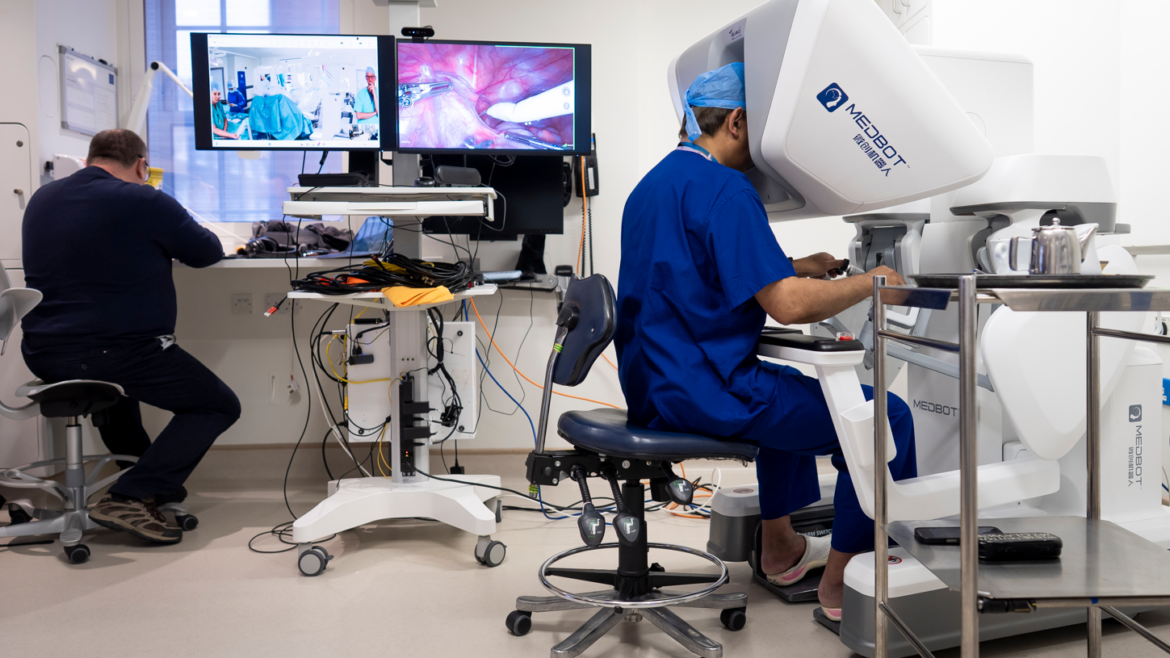
A surgical team at a major NHS teaching hospital has successfully completed the United Kingdom’s first long-distance robotic-assisted operation, in which a consultant surgeon performed a complex abdominal procedure on a patient located more than 200 miles away. The operation, conducted using a next-generation robotic surgical platform connected via a dedicated low-latency fibre-optic network, has been hailed by clinicians, engineers and health policymakers as a milestone in the evolution of the National Health Service.

The procedure, a laparoscopic cholecystectomy — the removal of a gallbladder — was performed by a consultant hepatobiliary surgeon who was seated at a robotic console in London. The patient, a woman in her fifties with a history of gallstones and acute cholecystitis, was on the operating table at a district general hospital in the North of England. Between them, the robotic platform translated the surgeon’s hand movements into precise, tremor-filtered manipulations of miniature instruments inside the patient’s abdomen, with a round-trip latency of less than 20 milliseconds.

The operation lasted approximately 45 minutes and was completed without complications. The patient, who was awake under regional anaesthesia and monitored throughout by a local anaesthetic team, was discharged the following day. In a brief statement released through the hospital, she expressed gratitude to both the surgical team and the engineers who had made the procedure possible. “I was nervous, of course,” she said. “But the team explained everything, and I felt safe. The fact that the surgeon was in London and I was here didn’t really register once it started. It just felt like someone was looking after me.”

The clinical team emphasised that the procedure was not a stunt or a demonstration but a carefully planned, ethically approved and fully regulated surgical intervention. The patient had been selected based on her clinical suitability, and the operation had been rehearsed extensively using simulation software and cadaveric models. A full surgical team, including an assistant surgeon, an anaesthetist and scrub nurses, was present in the operating theatre with the patient, ready to intervene immediately in the unlikely event of a technical failure.

The engineering achievement behind the operation is considerable. The robotic platform, developed by a British medical technology company in partnership with a leading university, incorporates advanced haptic feedback systems that allow the surgeon to “feel” tissue resistance through the robotic instruments, a capability that previous generations of surgical robots lacked. The dedicated network connection, provisioned by a major telecommunications provider, was designed to guarantee the ultra-low latency and jitter-free performance required for real-time surgical control. A backup network path was maintained throughout the procedure, and the system included an automatic fail-safe that would have locked the instruments in place had the connection been interrupted.

Pages: 1 2

Advertisement

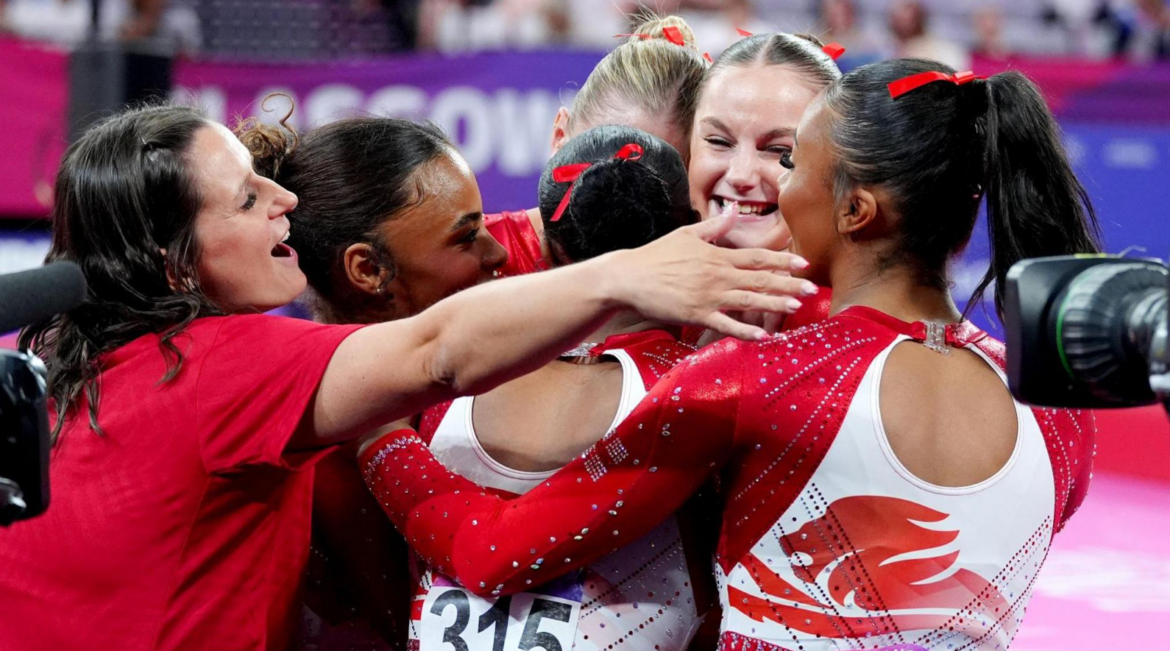
Team England has unveiled its largest-ever squad for the 2026 Commonwealth Games, naming more than 500 athletes across 20 sporting disciplines in a selection that reflects both the depth of English sporting talent and the strategic ambition of the organisations responsible for high-performance sport. The squad, announced at a ceremony at the National Basketball Performance Centre in Manchester, includes a mixture of established stars, emerging prospects and, in several cases, athletes making their first appearance at a major multi-sport event.

The Commonwealth Games, held every four years and contested by athletes from the 56 member nations of the Commonwealth, occupy a distinctive position in the sporting calendar. They are not the Olympics, with their global scale and commercial enormity. They are not the World Championships of individual sports, with their singular focus. They are something more intimate, more familial, more rooted in the shared history and mutual recognition of nations bound by language, law and, in many cases, a complicated colonial past. For English athletes, they represent an opportunity to compete for their country in a context that is competitive without being overwhelming, prestigious without being crushing.

The squad spans the full range of Commonwealth sports, from the traditional core of athletics, swimming, cycling and boxing to the newer additions of cricket, basketball, 3×3 basketball and para-sport disciplines. The inclusion of para-sport events within the main programme, rather than as a separate competition, is a relatively recent development and one that the English team has embraced wholeheartedly. More than 60 para-athletes are included in the squad, competing in events ranging from wheelchair basketball to para-swimming to para-athletics.

The selection process, coordinated by the British Olympic Association in partnership with the individual national governing bodies, has been underway for several months. Athletes were assessed against published qualification standards, with additional discretion granted to selectors in cases where injury, illness or exceptional circumstances affected an athlete’s ability to meet the criteria. The result is a squad that is both meritocratic and pragmatic, rewarding consistent performance while allowing for the human variables that inevitably affect sporting careers.

The political context of the Games is, as always, present but muted. The Commonwealth itself is an institution in perpetual negotiation with its own history, and the Games are one of the few arenas in which that history is expressed through competition rather than diplomacy. The English team, as the representative of the largest and wealthiest Commonwealth nation, carries a particular responsibility to engage with the Games in a spirit of respect and reciprocity. The team’s chef de mission, a former Olympic medallist, emphasised this point in her remarks at the announcement ceremony. “We go not just to win medals, though we intend to win medals,” she said. “We go to compete, to celebrate, and to honour the spirit of the Commonwealth. That means treating every athlete, from every nation, with the respect they deserve.”

The funding model for Team England’s preparation is a combination of public investment, National Lottery funding and private sponsorship. UK Sport, the government agency responsible for distributing high-performance funding, has allocated approximately £40 million to the sports represented in the squad over the current four-year cycle. The National Lottery, through its Good Causes fund, contributes a further £25 million. Corporate sponsors, including several major British brands, provide additional support in the form of equipment, travel and training facilities.

Pages: 1 2

Advertisement

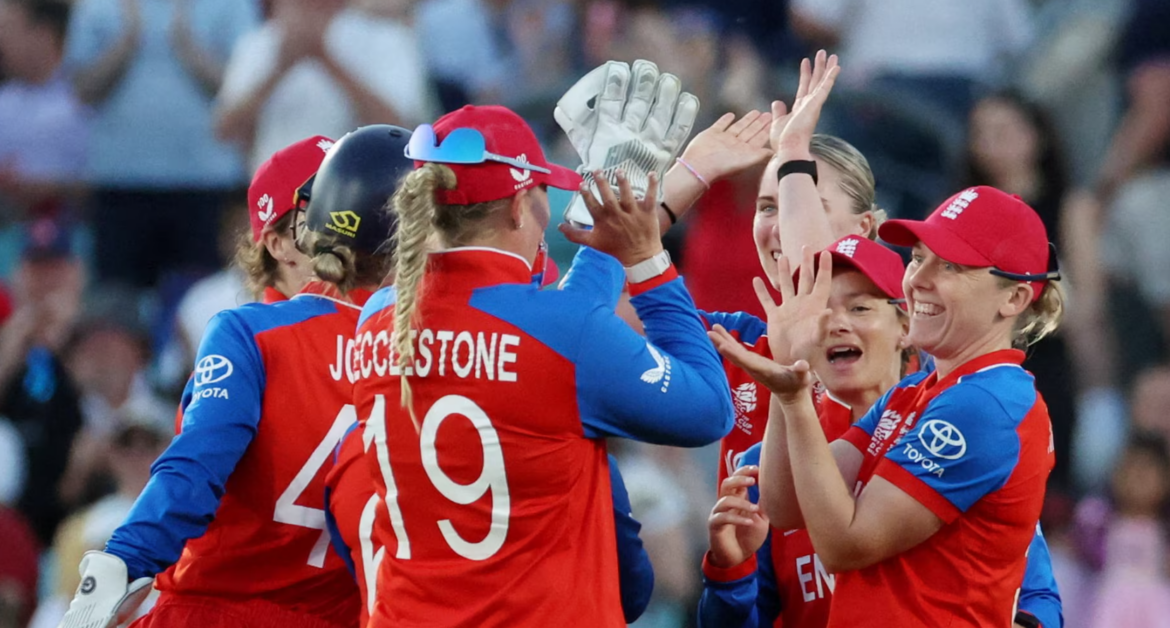
The England and Wales Cricket Board has confirmed that the final of the 2026 Women’s T20 World Cup will be played at Lord’s Cricket Ground in London, and the announcement has been met with a wave of enthusiasm that reflects both the growing stature of the women’s game and the deep emotional resonance of Lord’s as a venue. The final, scheduled for late August, will be the culmination of a tournament that has been hosted across several venues in England and Wales, and the decision to stage the showpiece at the Home of Cricket was described by the ECB as “a statement of intent for the future of women’s cricket.”

The England squad, named at a ceremony at the Kia Oval in London, was greeted with approval from commentators, fans and former players. The 15-strong group blends experience and youth, with several veterans of the 2019 and 2023 World Cup campaigns alongside a cohort of emerging talents who have impressed in the domestic Charlotte Edwards Cup and the Rachael Heyhoe Flint Trophy. The captain, who has led the side for three years and overseen a period of significant development, expressed confidence in the group’s depth and versatility.

“We have players who can win a game with the bat, with the ball, in the field,” the captain said. “We have players who have been in this situation before and players who are hungry for their first World Cup final. That combination is powerful. And we have the home crowd. That is not a small thing.”

The squad selection was not without its talking points. The omission of a senior all-rounder, who has been a mainstay of the side for several years but has struggled with form this season, generated the customary debate among fans and pundits. The selectors defended the decision, citing the need for balance and the emergence of younger players who offered greater flexibility in the T20 format. The omitted player, to her credit, issued a gracious statement wishing the squad well and expressing her pride in having represented her country.

The decision to host the final at Lord’s carries symbolic weight that extends beyond cricket. Lord’s, with its Victorian pavilion, its honours boards and its deeply ingrained traditions, has historically been a bastion of the men’s game. The first women’s match at Lord’s was played in 1976, and it was not until 2017 that the ground hosted a Women’s World Cup final. The 2026 final will be only the third time that the women’s game has taken centre stage at the ground, and the ECB has made clear that it intends the occasion to be a landmark moment in the sport’s ongoing journey toward equality.

The commercial response has been robust. Broadcast rights for the tournament have been secured by a major terrestrial channel, ensuring that the final will be available to a free-to-air audience of millions. Sponsorship revenue has exceeded initial projections, and ticket sales for the final have been strong, with the ECB anticipating a sell-out crowd of approximately 30,000. The corporate hospitality packages, once the exclusive preserve of men’s Test matches, have been in high demand, reflecting the growing commercial viability of the women’s game.

Pages: 1 2

Advertisement

Newer Posts
logo-white

Magnum News
[email protected]

+447876684692

Disclaimer

The content published on this website is provided for general informational purposes only. While we strive to deliver accurate and up-to-date information, we make no representations or warranties of any kind, express or implied, about the completeness, accuracy, reliability, or availability of the articles, opinions, or other materials contained on this website. Any reliance you place on such information is strictly at your own risk. Nothing on this website constitutes professional, medical, legal, financial, or investment advice. Always consult a qualified professional before making decisions based on information found here.

Editors' Picks

Latest Posts