

Home Uncategorized
Category:

Uncategorized

Advertisement

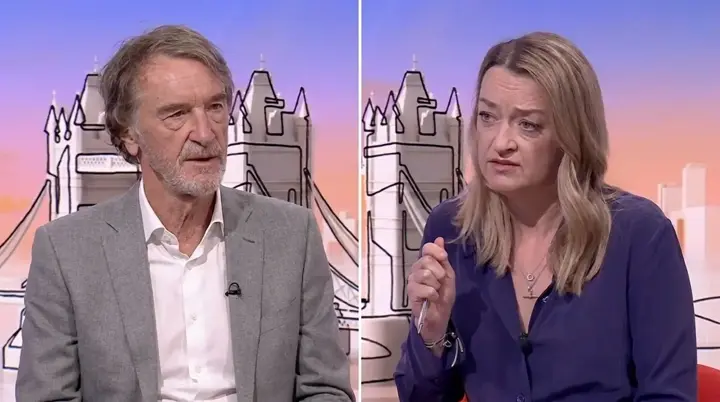
Sir Jim Ratcliffe has spent much of his career building businesses away from the daily attention of the British public.

Manchester United changed that.

Since the billionaire founder of INEOS acquired a major minority stake in one of the world’s most famous football clubs and assumed responsibility for its football operations, decisions carrying his name have been examined in extraordinary detail.

Managers. Players. Jobs. Spending. Old Trafford. Ticket prices. The future of the club itself.

And behind many of those individual controversies sits a question familiar to journalists such as Laura Kuenssberg:

What happens when enormous power is concentrated in the hands of a small number of people — and their decisions begin affecting institutions millions consider their own?

For Ratcliffe, that question has become increasingly difficult to escape.

Ratcliffe Did Not Buy an Ordinary Business

Manchester United may technically be a company, but supporters have never treated it like one.

It is an institution built over generations.

When Ratcliffe’s investment was completed in February 2024, he spoke openly about restoring a club that had failed to win the Premier League since Sir Alex Ferguson’s departure in 2013.

He acknowledged that something was wrong with the environment at United and urged patience, saying the club needed to move carefully towards the right solutions rather than rush towards the wrong ones.

The ambition was enormous.

So were expectations.

For supporters frustrated by years of underperformance under the Glazer family’s ownership, Ratcliffe initially represented the possibility of fundamental change.

But changing Manchester United has proved considerably more complicated than buying into it.

The Decisions Quickly Became Painful

Ratcliffe’s arrival was followed by an aggressive attempt to reduce costs and restructure the organisation.

Jobs were cut.

Long-established practices were reconsidered.

Departments were reorganised.

The argument from the new leadership was essentially that Manchester United had become inefficient and needed to operate very differently if it wanted to compete again at the highest level.

For a businessman accustomed to restructuring industrial companies, there was a certain logic to the approach.

But football creates a problem that conventional businesses do not.

Every decision has an audience.

And that audience cares deeply.

A spreadsheet may identify an expense.

A supporter may see a tradition.

An executive may see restructuring.

An employee may see the end of a career.

That tension has followed Ratcliffe throughout his attempt to rebuild United.

Even the Future of Old Trafford Became Part of the Debate

Then there is the stadium.

Old Trafford is one of the most recognisable football grounds in the world, but its ageing infrastructure has become symbolic of Manchester United’s broader decline.

Ratcliffe has been willing to think much bigger than simply repairing it.

From the early stages of his involvement, he discussed the possibility of creating a major new stadium capable of serving not merely Manchester United but the wider north of England.

The idea demonstrated the scale of his ambition.

It also raised another question.

How much should private ambition depend upon public support?

Major stadium and regeneration projects inevitably involve transport, infrastructure, planning authorities and potentially government participation.

At that point, a football story starts becoming a political one.

This Is Where Laura Kuenssberg’s World Meets Ratcliffe’s

Laura Kuenssberg has spent years interviewing the people responsible for Britain’s biggest political decisions.

Prime ministers, ministers and opposition leaders are routinely confronted with questions about responsibility, money and power.

Ratcliffe operates in a different arena.

He is not an elected politician.

But Britain’s most powerful business figures increasingly make decisions capable of producing consequences that resemble political ones.

They employ thousands of people.

They control culturally important institutions.

They influence investment.

And their decisions can transform communities.

Manchester United makes that dynamic particularly visible.

The club’s supporters do not vote for Ratcliffe.

Yet decisions made by Ratcliffe and the executives around him can affect an institution that forms part of the identity of Manchester and commands a global following numbering in the hundreds of millions.

That creates a strange form of accountability.

Ratcliffe Has Never Hidden His Philosophy

One thing has remained consistent throughout his involvement with United: Ratcliffe has repeatedly presented himself as someone interested in long-term structural change rather than quick reactions.

That became particularly clear when questions surrounded the future of manager Ruben Amorim.

Ratcliffe publicly argued against running the club through “knee-jerk” decisions and indicated that Amorim needed significant time to demonstrate whether he could succeed.

It was consistent with the message Ratcliffe had delivered when his investment was first completed.

Manchester United’s problems had accumulated over many years.

He did not believe they could be repaired overnight.

But patience becomes harder to sell when results fail to meet expectations.

The Billionaire Problem

There is also a broader reason Ratcliffe attracts attention.

Britain has an increasingly complicated relationship with billionaires.

Successful entrepreneurs can create enormous companies, employment and investment.

At the same time, the influence accumulated through that wealth creates legitimate questions about accountability.

Ratcliffe embodies both sides of that argument.

INEOS grew into an enormous international industrial group.

His business career made him one of Britain’s most prominent entrepreneurs.

That same wealth eventually allowed him to acquire a powerful position inside Manchester United.

For supporters, however, the size of his fortune is largely irrelevant.

They judge him by something much simpler:

Is Manchester United getting better?

That Question Has Become Impossible to Avoid

This is ultimately why the Ratcliffe story extends beyond football.

When a billionaire takes control of something people feel belongs partly to them culturally, conventional ideas about ownership become complicated.

Legally, supporters do not own Manchester United.

Emotionally, many believe they do.

Ratcliffe therefore occupies an unusual position.

He has the authority to make decisions.

Supporters have the ability to judge those decisions publicly.

Journalists have the ability to question them.

And politicians can become involved whenever the consequences extend beyond the boundaries of Old Trafford.

It creates precisely the kind of intersection between money, power and accountability that dominates Britain’s wider public debate.

Laura Kuenssberg Represents the Other Side of That Equation

Kuenssberg’s career has largely been built around questioning people with power.

The individual sitting opposite the interviewer changes.

The underlying principle does not.

Why was this decision made?

Who benefits?

Who pays?

What happens if it fails?

And who ultimately takes responsibility?

Those questions apply just as naturally to Britain’s corporate leaders as they do to its politicians.

Ratcliffe’s transformation of Manchester United provides an unusually visible example.

Every major decision can be measured.

Every promise can eventually be compared with reality.

And millions of supporters are watching.

Ratcliffe’s Legacy at United Is Still Unfinished

It is far too early to know how history will judge Jim Ratcliffe’s involvement with Manchester United.

His original ambition was unmistakable: restore one of football’s greatest institutions to the level it once occupied.

Achieving it requires considerably more than money.

United need sporting stability, intelligent recruitment, better infrastructure and an organisation capable of competing with clubs that spent years modernising while Old Trafford fell behind.

Ratcliffe knew the scale of that challenge when he arrived.

What he could not control was how closely every step would be examined.

That may ultimately become the defining feature of his Manchester United experiment.

A businessman who spent decades building an empire is now trying to rebuild something millions of people believe is more important than any ordinary company.

And in modern Britain, people with that much influence rarely get to make their biggest decisions without somebody asking difficult questions.

That is where the worlds of Jim Ratcliffe and Laura Kuenssberg ultimately meet — not through a fabricated television confrontation, but through the much bigger British argument about power, responsibility and who gets to demand answers.

Для креатива я бы здесь особенно рассматривал “Jim Ratcliffe Is Facing Questions Few Expected When He Took Control”, “The Questions Surrounding Jim Ratcliffe Are Getting Harder to Ignore” или вариант с обоими именами: “Jim Ratcliffe & Laura Kuenssberg: The Question of Power Britain Can No Longer Ignore.”
Advertisement

For Prince Harry, the past few weeks have brought the kind of developments that could define the next chapter of his life.

Six years after stepping away from royal duties and building a new home in California, the Duke of Sussex is preparing for a major change.

Harry, Meghan and their two children are expected to return to Britain, bringing the family back to the country they left in 2020.

But the surprising development comes at an unusually difficult moment for the prince.

Only weeks earlier, Harry suffered a major defeat in his long-running legal battle with the British press. Now a new court order has added a potentially substantial financial consequence to that loss.

A Court Battle That Became Deeply Personal

Harry’s confrontation with Britain’s tabloid press has lasted for years.

He has repeatedly argued that aggressive media practices caused enormous damage to his private life and contributed to his decision to leave Britain with Meghan.

The prince has also linked his attitude towards the press to the experiences of his mother, Princess Diana.

This year, one of the most significant remaining battles finally reached London’s High Court.

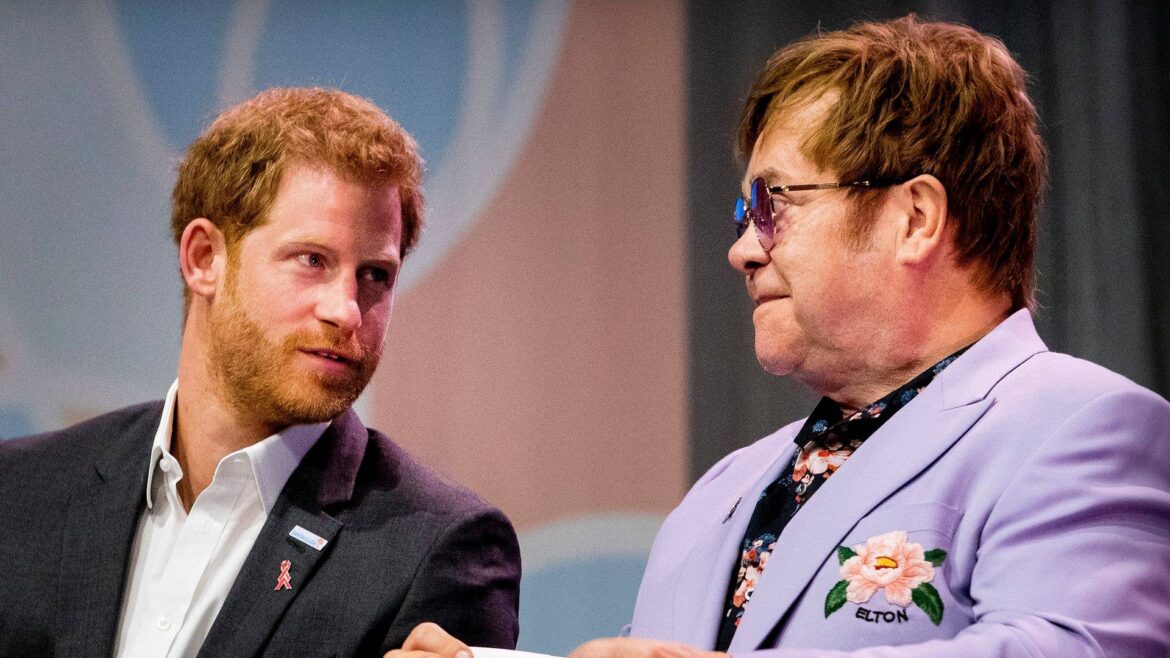
Harry joined Elton John and five other prominent claimants in bringing privacy cases against Associated Newspapers, publisher of the Daily Mail and Mail on Sunday.

They alleged that unlawful methods had been used to obtain private information.

Associated Newspapers strongly denied wrongdoing.

Harry Took the Stand

The case produced one of its most striking moments in January.

Harry personally gave evidence in the High Court, only the second time he had entered the witness box in his long-running campaign against British newspaper publishers.

At one stage, the prince became emotional while discussing the effect that press coverage had had on Meghan.

He told the court that the situation had made his wife’s life extremely difficult.

For Harry, the proceedings appeared to represent considerably more than a conventional dispute over privacy.

They were part of a confrontation with sections of the British media that had shaped much of his adult life.

Then Came the Decision

On July 7, the High Court dismissed the claims.

Judge Matthew Nicklin rejected the case brought by Harry and the other claimants against Associated Newspapers.

It was a significant reversal for a prince who had previously secured victories and settlements in other legal actions involving British newspaper groups.

Harry strongly disagreed with the outcome, describing the judgment as a “whitewash”.

But the consequences did not end with the defeat itself.

A £9.54 Million Order Followed

On August 21, another decision arrived.

The court ordered Harry, Elton John and the other unsuccessful claimants to make an interim payment of £9.54 million towards Associated Newspapers’ legal costs.

The payment was ordered to be made by August 28.

The final financial consequences could be greater.

The court previously heard that Associated Newspapers’ legal bill amounted to approximately £34.5 million, while the claimants had insurance coverage of £16 million.

The precise amount ultimately recoverable has yet to be determined.

Judge Nicklin was also highly critical of aspects of the way the claimants had conducted the case, saying that serious allegations had rested on speculative and inferential foundations.

It turned an already significant courtroom defeat into an even more difficult result.

And Then Britain Learned Harry Was Coming Back

Against that backdrop came an entirely different development.

Harry and Meghan are planning to move back to Britain with Prince Archie and Princess Lilibet, six years after relocating to North America.

The children are expected to attend school in the UK, although Harry and Meghan will remain non-working members of the Royal Family and are not expected to live on a royal estate.

The timing makes the decision particularly striking.

Harry left Britain amid intense dissatisfaction with media attention, disagreements over security and growing tensions within the Royal Family.

Now he is preparing to return to the same country while many of those issues remain unresolved.

The Royal Question Has Not Disappeared Either

Returning to Britain inevitably raises another question: what happens to Harry’s relationship with his family?

His relationship with Prince William has remained particularly strained following years of public disagreements and revelations about royal life.

Relations with King Charles have shown some signs of improvement, although a complete reconciliation within the family should not be assumed.

Harry’s return therefore does not automatically mean a return to the life he had before 2020.

He and Meghan will be returning as private individuals rather than working royals.

That distinction could determine how their new life in Britain develops.

A Very Different Prince Harry Is Returning

The Harry who left Britain in 2020 was still adjusting to a dramatic break from royal life.

The man returning has spent six years building a different public identity.

He has published a memoir, produced television projects, pursued multiple legal cases and spoken publicly about subjects that would once have remained behind palace walls.

Some of his legal battles produced victories.

Others did not.

The latest Daily Mail judgment represents one of his most significant defeats.

Yet almost simultaneously, Harry is making a decision that few would have predicted several years ago.

He is coming home.

The Next Chapter May Be the Most Difficult One Yet

There is no evidence that Prince Harry is returning to royal duties.

Nor does moving back to Britain erase the disputes involving his family, security or the press.

What it does represent is another major change in a life that has rarely remained static for long.

Within a matter of weeks, Harry has lost his final outstanding legal battle against the British press, faced the prospect of millions of pounds in legal costs and prepared to relocate his family across the Atlantic.

Each development would have generated headlines on its own.

Together, they leave Prince Harry entering one of the most consequential periods since he and Meghan walked away from royal duties six years ago.

This time, however, the story is unfolding back in Britain.

Advertisement

For the England national team, this evening was supposed to be another step towards the match the country has been waiting for for decades.

Instead, the 2026 World Cup semi-final against Argentina ended in one of the most heartbreaking moments of the tournament for the English players and their supporters.

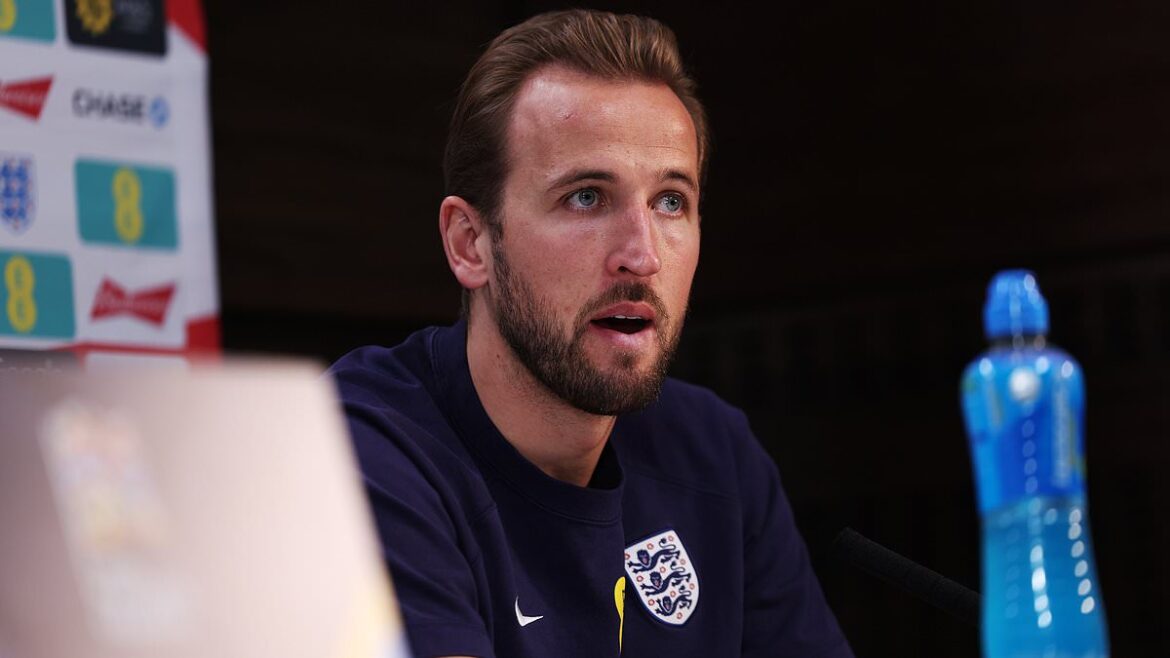
Shortly after the final whistle, England captain Harry Kane appeared before the cameras.

His words were brutally honest.

England were leading 1–0 and were on the brink of the final, but conceded twice and lost 1–2. Kane admitted that, after scoring, the team had focused too much on trying to hold onto their lead.

“At this level, that’s not enough,” said the captain after the match.

It was precisely this admission that sparked a new debate surrounding the national team.

What Happened in the Semi-Final

For most of the match, England did indeed remain in contention.

After Anthony Gordon’s goal, Thomas Tuchel’s side took the lead and had the chance to reach the World Cup final for the first time since 1966.

But the nature of the match gradually changed.

Argentina stepped up the pressure, Enzo Fernández equalised, and Lautaro Martínez scored the decisive goal in stoppage time.

For the English players, this meant yet another semi-final and yet another missed opportunity.

Kane’s reaction after the match summed up the team’s mood perfectly.

He spoke of the sheer effort the players had put into the tournament and admitted he was devastated by the result.

But Another Debate Was Already Raging Around Kane

For the England captain, the World Cup itself turned out to be packed with more than just footballing events.

Shortly before the quarter-final, Kane confirmed an unusual story that Donald Trump had previously recounted publicly: the footballer had indeed played golf with him.

Kane described the experience as “surreal” and spoke highly of the US president’s game.

Following the publication of his comments, there was a noticeable negative reaction on British social media.

Thus, even before the decisive matches, the captain found himself in the spotlight far beyond the football pitch.

Questions Then Arose Within the Squad

Another story emerged following England’s victory over Norway in the quarter-finals.

Despite the 2–1 result, Thomas Tuchel publicly criticised the quality of the team’s performance. Jude Bellingham’s reaction to the manager’s comments fuelled speculation about a possible rift within the squad.

Once again, it fell to Kane to answer the questions.

The captain dismissed reports of a rift and stated that Bellingham’s reaction following an emotional match had been over-interpreted. He also publicly backed Tuchel and emphasised the team’s unity.

After the Defeat, Kane Spoke to the Cameras Once Again

That is precisely why his post-match interview following the Argentina game attracted particular attention.

Kane did not try to portray the defeat as the result of a single unfortunate incident.

He acknowledged that, after taking the lead, England allowed their opponents to seize the initiative and found themselves under virtually constant pressure.

However, the captain refused to write the team off.

In his view, England had once again proved that they are capable of reaching the later stages of major tournaments, but they still need to find that missing element that will allow them to take that final step.

What Lies Ahead for Harry Kane

After the tournament, another obvious question arose: was this Kane’s last chance to win the World Cup?

The footballer’s response turned out to be more interesting than many had expected.

On 20 July, Kane stated that he had not ruled out taking part in another World Cup. At the same time, he expressed his support for Thomas Tuchel and spoke highly of the atmosphere the manager had created within the squad.

Therefore, one can only speak of a ‘sad day’ in relation to England’s dramatic defeat, but not to the end of Kane’s career.

On the contrary, the captain made it clear that this story may yet have a sequel.

Following the semi-final defeat, he acknowledged the team’s mistakes, publicly backed the manager and left the door open for another attempt at the World Cup.

That is precisely why Harry Kane’s final words sparked such interest: after one of the toughest evenings of his international career, the England captain spoke not of retirement, but of the fact that the team is still trying to find that final step separating them from football’s top trophy.

Of your headlines, “Harry Kane’s words spread like wildfire across Britain” can quite naturally be linked to this article. However, I wouldn’t use “scandal”, “utter chaos” and “the British are demanding explanations” literally: the sources I’ve found do not corroborate this.

Advertisement

logo-white

Magnum News
[email protected]

+447876684692

Disclaimer

The content published on this website is provided for general informational purposes only. While we strive to deliver accurate and up-to-date information, we make no representations or warranties of any kind, express or implied, about the completeness, accuracy, reliability, or availability of the articles, opinions, or other materials contained on this website. Any reliance you place on such information is strictly at your own risk. Nothing on this website constitutes professional, medical, legal, financial, or investment advice. Always consult a qualified professional before making decisions based on information found here.

Editors' Picks

Latest Posts