

Home Science
Category:

Science

Advertisement

In a laboratory on the Wellcome Genome Campus outside Cambridge, a technician places a small tissue sample into a sequencing machine no larger than a desktop printer. The sample is from a common British earthworm, Lumbricus terrestris, an animal that has been turning the soil of these islands since the last Ice Age. Within hours, the machine will have read the worm’s entire genetic code, all 130 million base pairs of it, and uploaded the data to a publicly accessible database. It is a small act, easily overlooked. But multiplied by 70,000, it becomes one of the most ambitious scientific projects ever undertaken in Britain.

The Genomic Britain programme, a collaboration between the Wellcome Sanger Institute, the Natural History Museum, the Royal Botanic Gardens at Kew and a consortium of universities, aims to sequence the complete genome of every wild species found in the United Kingdom. The project, which builds on the pioneering Darwin Tree of Life initiative, has received £200 million in initial funding from the government’s Life Sciences Sector Plan and an additional £100 million from charitable and private sources. The target is to complete the sequencing within ten years, creating a comprehensive genetic reference library for British biodiversity.

The scale of the undertaking is difficult to comprehend. The UK is home to approximately 70,000 species of animals, plants, fungi and protists. Of these, around 20,000 have been genomically characterised to some degree, but the vast majority remain unread. The programme will require the collection, preservation and analysis of tissue samples from every species, a logistical challenge that involves field biologists, museum curators, citizen scientists and an army of volunteers criss-crossing the country from the chalk downs of Sussex to the peat bogs of Caithness.

The scientific value of the project is immense. A complete genomic library would transform the study of British ecology, enabling researchers to understand the genetic basis of adaptation, to trace the evolutionary relationships between species, to identify populations at risk of inbreeding and genetic decline, and to develop more effective conservation strategies. It would also provide the reference data needed for environmental DNA sampling, a technique that allows the presence of species to be detected from traces of genetic material in water, soil or air, revolutionising the monitoring of biodiversity.

The economic case, as outlined in a report published alongside the programme’s launch, is equally compelling. The authors estimate that the genomic library could generate up to £3 billion in economic value over twenty years, through applications in agriculture, pharmaceuticals, environmental management and biotechnology. The agricultural applications include the development of pest-resistant crop varieties informed by the genomic data of wild relatives, the improvement of soil health through a better understanding of microbial communities, and the breeding of livestock with enhanced disease resistance.


Pages: 1 2

Advertisement

The government has unveiled the most significant reform of the UK’s research funding architecture in a generation, proposing a restructuring of UK Research and Innovation, the body that distributes more than £8 billion in public research funding annually, and introducing a new framework for setting strategic priorities that aims to align scientific investment more closely with economic and social outcomes. The proposals, published in a white paper by the Department for Science, Innovation and Technology, have been met with a mixture of cautious optimism and institutional anxiety from the research community.

The central plank of the reform is the creation of a new Strategic Research Council, which will sit alongside the existing research councils and be responsible for identifying and funding large-scale, mission-oriented research programmes in areas of national priority. The initial missions, as outlined in the white paper, include clean energy, healthy ageing, artificial intelligence and advanced manufacturing. Each mission will be allocated a multi-year budget, insulated from the annual spending review cycle, and will be governed by a board comprising senior academics, industry leaders and public sector representatives.

The existing research councils — the bodies that fund discipline-specific research in areas ranging as the Medical Research Council, the Engineering and Physical Sciences Research Council and the Arts and Humanities Research Council — will retain their identities and their peer-review processes, but will be required to demonstrate how their funding portfolios contribute to the broader strategic missions. The intention, according to the white paper, is not to abolish curiosity-driven research but to ensure that it exists within a framework that connects it to the nation’s economic and social needs.

The reaction from the scientific community has been nuanced. The president of the Royal Society welcomed the commitment to multi-year funding and the recognition of research as an economic driver, but cautioned against an overly instrumentalist approach. “The history of science is full of discoveries that were made without any intention of economic application and that turned out to be transformative,” the president said. “Penicillin. The structure of DNA. The World Wide Web. None of these was the product of a mission. They were the product of curiosity, supported by patient, undirected funding. We must protect that space.”

The vice-chancellors of the Russell Group universities expressed similar concerns, while acknowledging the need for reform. The chair of the group noted that the current system, while imperfect, had produced world-leading research across a broad range of disciplines, and that any restructuring must avoid the concentration of funding in a narrow set of applied priorities at the expense of the humanities, social sciences and fundamental physical sciences. “The economy needs engineers and medics,” the chair said. “But it also needs historians, linguists, philosophers and sociologists. A society that funds only what it can immediately monetise is a society that has misunderstood the nature of knowledge.”

The business community, by contrast, has been broadly enthusiastic. The Confederation of British Industry described the reforms as “a step in the right direction,” noting that British industry had long struggled to access and exploit the country’s academic research base. The director of a leading technology trade body welcomed the emphasis on mission-oriented funding, arguing that it would provide the “direction and scale” that private investors needed to commit capital to long-term research and development.

The political dimension is significant. The reforms are explicitly linked to the government’s broader economic strategy, which positions science and innovation as the primary drivers of productivity growth and regional rebalancing. The Prime Minister, in a foreword to the white paper, described research funding as “not a cost but an investment, and not a luxury but a necessity.” The Opposition, while supportive of the broad direction, has questioned the pace of implementation and the adequacy of the transitional funding arrangements for existing research projects.

Pages: 1 2

Advertisement

The corridor of land stretching between Oxford, Cambridge and London, long known as the “Golden Triangle” of British science, is undergoing a transformation that even its most optimistic advocates could not have predicted five years ago. The life sciences sector plan, published by the government in the summer of 2025, has catalysed an investment boom that is reshaping the physical, economic and intellectual landscape of the region, with £3 billion in combined public and private funding committed in the first twelve months alone.

The Golden Triangle is not a new phenomenon. Oxford and Cambridge have been centres of scientific inquiry for centuries, and London’s cluster of teaching hospitals, research institutes and pharmaceutical headquarters has been a global force in biomedical science since the post-war era. What is new is the scale and coordination of the investment, and the explicit policy intention to translate the region’s research excellence into commercial output, manufacturing capacity and high-skilled employment.

In Oxford, the expansion is visible in the cranes and construction hoardings that have become a familiar feature of the city’s eastern fringe. A new advanced therapy manufacturing centre, funded jointly by the government and a consortium of pharmaceutical companies, is nearing completion on the site of a former industrial estate. The facility, which will produce gene and cell therapies for clinical trials and, eventually, commercial supply, is expected to employ more than 400 scientists, engineers and technicians when it becomes fully operational in 2027.

Cambridge, meanwhile, is experiencing a similar surge. A major pharmaceutical company’s £600 million expansion of its research and development campus on the city’s biomedical corridor will add three new laboratory buildings, a clinical research unit and a collaborative innovation hub designed to bring together academic researchers, startup founders and industry scientists under one roof. The expansion is the largest single private investment in Cambridge’s life sciences sector since the establishment of the biomedical campus in the 1990s.

London’s contribution is more diffuse but no less significant. The capital’s network of teaching hospitals, including several world-renowned institutions, is being integrated into a coordinated clinical research infrastructure that will streamline the process of recruiting patients for trials, collecting data and translating research findings into clinical practice. A new life sciences data centre, located in the White City innovation district, will provide the computational infrastructure for genomic analysis, artificial intelligence-driven drug discovery and real-world evidence generation.

The economic impact on the region is substantial. The sector plan is estimated to have created more than 8,000 new jobs in the Golden Triangle over the past year, ranging from postdoctoral researchers and clinical trial coordinators to manufacturing technicians, data scientists and regulatory affairs specialists. The average salary in the life sciences sector is significantly above the regional median, and the multiplier effects on local economies — in housing, retail, transport and professional services — are considerable.

The property market has responded predictably. Commercial rents for laboratory and office space in Oxford and Cambridge have risen sharply, and several developers have announced plans for new life sciences parks on the peripheries of both cities. The pressure on housing is also acute, with key workers in the sector competing for accommodation in markets already constrained by green belt regulations, limited supply and high demand from the university and technology sectors.

Pages: 1 2

Advertisement

A team of palaeontologists at the Natural History Museum in London has published a study that fundamentally revises the scientific understanding of turtle evolution, drawing on a detailed analysis of a remarkably preserved fossil specimen that has been held in the museum’s collections for more than a century. The research, published in a leading international journal, suggests that the ancestors of modern turtles diverged from their closest relatives significantly earlier than previously thought, and that the iconic shell evolved in a series of stages rather than as a single, sudden adaptation.

The fossil in question, a partial skeleton of an early turtle relative dating from the late Permian period, approximately 260 million years ago, was collected in South Africa in the 1920s and shipped to London, where it was catalogued, briefly described and then, as so often happens in the vast archives of a major natural history museum, largely forgotten. It was rediscovered in 2023 by a doctoral student who was conducting a systematic review of the museum’s Permian reptile holdings and noticed that the specimen’s anatomical features did not align with the existing classification.

The subsequent analysis, which took more than two years and involved high-resolution CT scanning, three-dimensional digital reconstruction and comparative anatomy with specimens from museums in South Africa, Germany and the United States, revealed that the fossil represented a previously unrecognised species, positioned on the evolutionary branch leading to modern turtles but predating the oldest previously known turtle ancestor by approximately 15 million years.

The implications are significant. The evolutionary origin of turtles has been one of the most contentious questions in vertebrate palaeontology for decades. Turtles are anatomically so distinctive — their bodies encased in a bony shell formed from fused ribs, vertebrae and dermal bone — that their relationships to other reptiles have been difficult to establish using morphology alone. Molecular studies, which compare DNA sequences across living species, have placed turtles within the group that includes lizards, snakes and the tuatara, but the fossil record has been sparse and ambiguous.

The new fossil provides a crucial data point. Its anatomy shows a partial development of the shell structure: the ribs are broadened and beginning to fuse, but the full carapace of a modern turtle has not yet formed. This supports the hypothesis that the shell evolved incrementally, with the broadening of the ribs serving initially as a stabilising adaptation for a burrowing or semi-aquatic lifestyle, and only later being co-opted into the defensive armour that defines the group.

Pages: 1 2

Advertisement

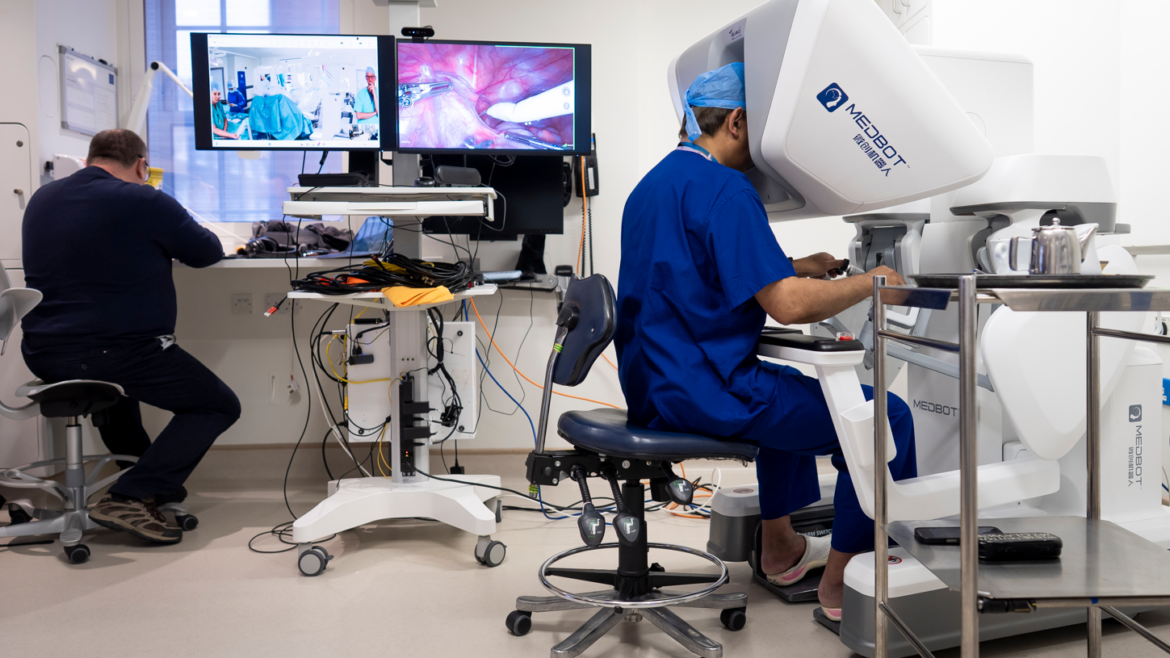
A surgical team at a major NHS teaching hospital has successfully completed the United Kingdom’s first long-distance robotic-assisted operation, in which a consultant surgeon performed a complex abdominal procedure on a patient located more than 200 miles away. The operation, conducted using a next-generation robotic surgical platform connected via a dedicated low-latency fibre-optic network, has been hailed by clinicians, engineers and health policymakers as a milestone in the evolution of the National Health Service.

The procedure, a laparoscopic cholecystectomy — the removal of a gallbladder — was performed by a consultant hepatobiliary surgeon who was seated at a robotic console in London. The patient, a woman in her fifties with a history of gallstones and acute cholecystitis, was on the operating table at a district general hospital in the North of England. Between them, the robotic platform translated the surgeon’s hand movements into precise, tremor-filtered manipulations of miniature instruments inside the patient’s abdomen, with a round-trip latency of less than 20 milliseconds.

The operation lasted approximately 45 minutes and was completed without complications. The patient, who was awake under regional anaesthesia and monitored throughout by a local anaesthetic team, was discharged the following day. In a brief statement released through the hospital, she expressed gratitude to both the surgical team and the engineers who had made the procedure possible. “I was nervous, of course,” she said. “But the team explained everything, and I felt safe. The fact that the surgeon was in London and I was here didn’t really register once it started. It just felt like someone was looking after me.”

The clinical team emphasised that the procedure was not a stunt or a demonstration but a carefully planned, ethically approved and fully regulated surgical intervention. The patient had been selected based on her clinical suitability, and the operation had been rehearsed extensively using simulation software and cadaveric models. A full surgical team, including an assistant surgeon, an anaesthetist and scrub nurses, was present in the operating theatre with the patient, ready to intervene immediately in the unlikely event of a technical failure.

The engineering achievement behind the operation is considerable. The robotic platform, developed by a British medical technology company in partnership with a leading university, incorporates advanced haptic feedback systems that allow the surgeon to “feel” tissue resistance through the robotic instruments, a capability that previous generations of surgical robots lacked. The dedicated network connection, provisioned by a major telecommunications provider, was designed to guarantee the ultra-low latency and jitter-free performance required for real-time surgical control. A backup network path was maintained throughout the procedure, and the system included an automatic fail-safe that would have locked the instruments in place had the connection been interrupted.

Pages: 1 2

Advertisement

logo-white

Magnum News
[email protected]

+447876684692

Disclaimer

The content published on this website is provided for general informational purposes only. While we strive to deliver accurate and up-to-date information, we make no representations or warranties of any kind, express or implied, about the completeness, accuracy, reliability, or availability of the articles, opinions, or other materials contained on this website. Any reliance you place on such information is strictly at your own risk. Nothing on this website constitutes professional, medical, legal, financial, or investment advice. Always consult a qualified professional before making decisions based on information found here.

Editors' Picks

Latest Posts