

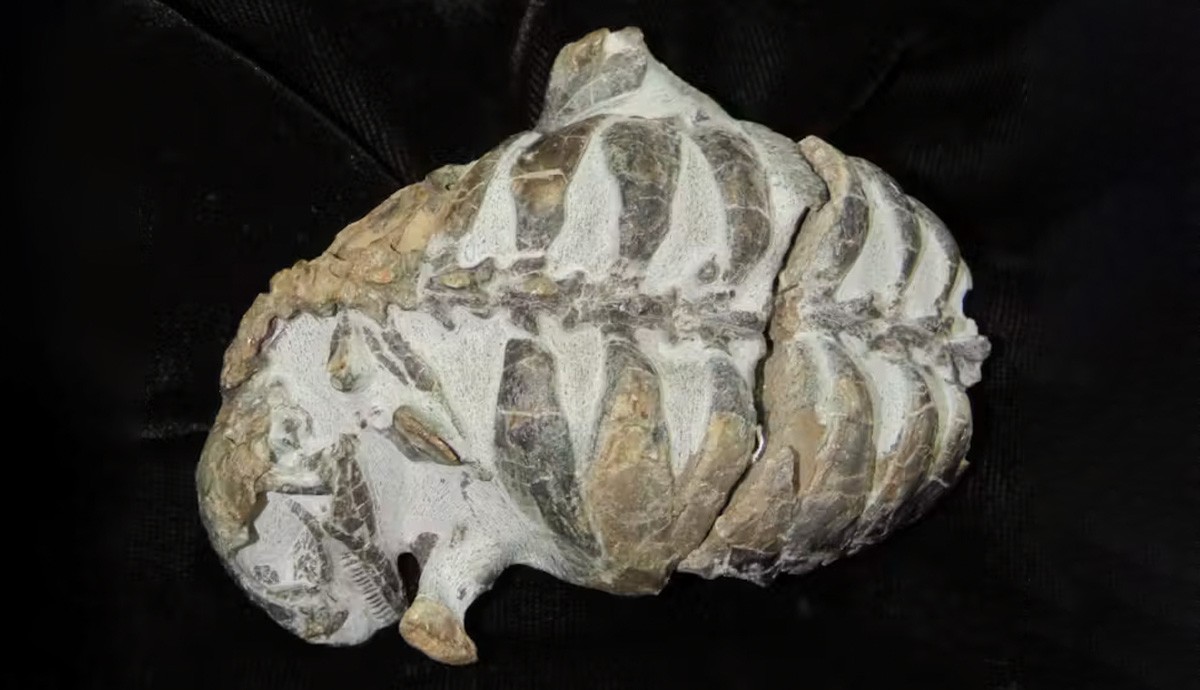
A team of palaeontologists at the Natural History Museum in London has published a study that fundamentally revises the scientific understanding of turtle evolution, drawing on a detailed analysis of a remarkably preserved fossil specimen that has been held in the museum’s collections for more than a century. The research, published in a leading international journal, suggests that the ancestors of modern turtles diverged from their closest relatives significantly earlier than previously thought, and that the iconic shell evolved in a series of stages rather than as a single, sudden adaptation.
Advertisement
The fossil in question, a partial skeleton of an early turtle relative dating from the late Permian period, approximately 260 million years ago, was collected in South Africa in the 1920s and shipped to London, where it was catalogued, briefly described and then, as so often happens in the vast archives of a major natural history museum, largely forgotten. It was rediscovered in 2023 by a doctoral student who was conducting a systematic review of the museum’s Permian reptile holdings and noticed that the specimen’s anatomical features did not align with the existing classification.
The subsequent analysis, which took more than two years and involved high-resolution CT scanning, three-dimensional digital reconstruction and comparative anatomy with specimens from museums in South Africa, Germany and the United States, revealed that the fossil represented a previously unrecognised species, positioned on the evolutionary branch leading to modern turtles but predating the oldest previously known turtle ancestor by approximately 15 million years.
The implications are significant. The evolutionary origin of turtles has been one of the most contentious questions in vertebrate palaeontology for decades. Turtles are anatomically so distinctive — their bodies encased in a bony shell formed from fused ribs, vertebrae and dermal bone — that their relationships to other reptiles have been difficult to establish using morphology alone. Molecular studies, which compare DNA sequences across living species, have placed turtles within the group that includes lizards, snakes and the tuatara, but the fossil record has been sparse and ambiguous.
The new fossil provides a crucial data point. Its anatomy shows a partial development of the shell structure: the ribs are broadened and beginning to fuse, but the full carapace of a modern turtle has not yet formed. This supports the hypothesis that the shell evolved incrementally, with the broadening of the ribs serving initially as a stabilising adaptation for a burrowing or semi-aquatic lifestyle, and only later being co-opted into the defensive armour that defines the group.