

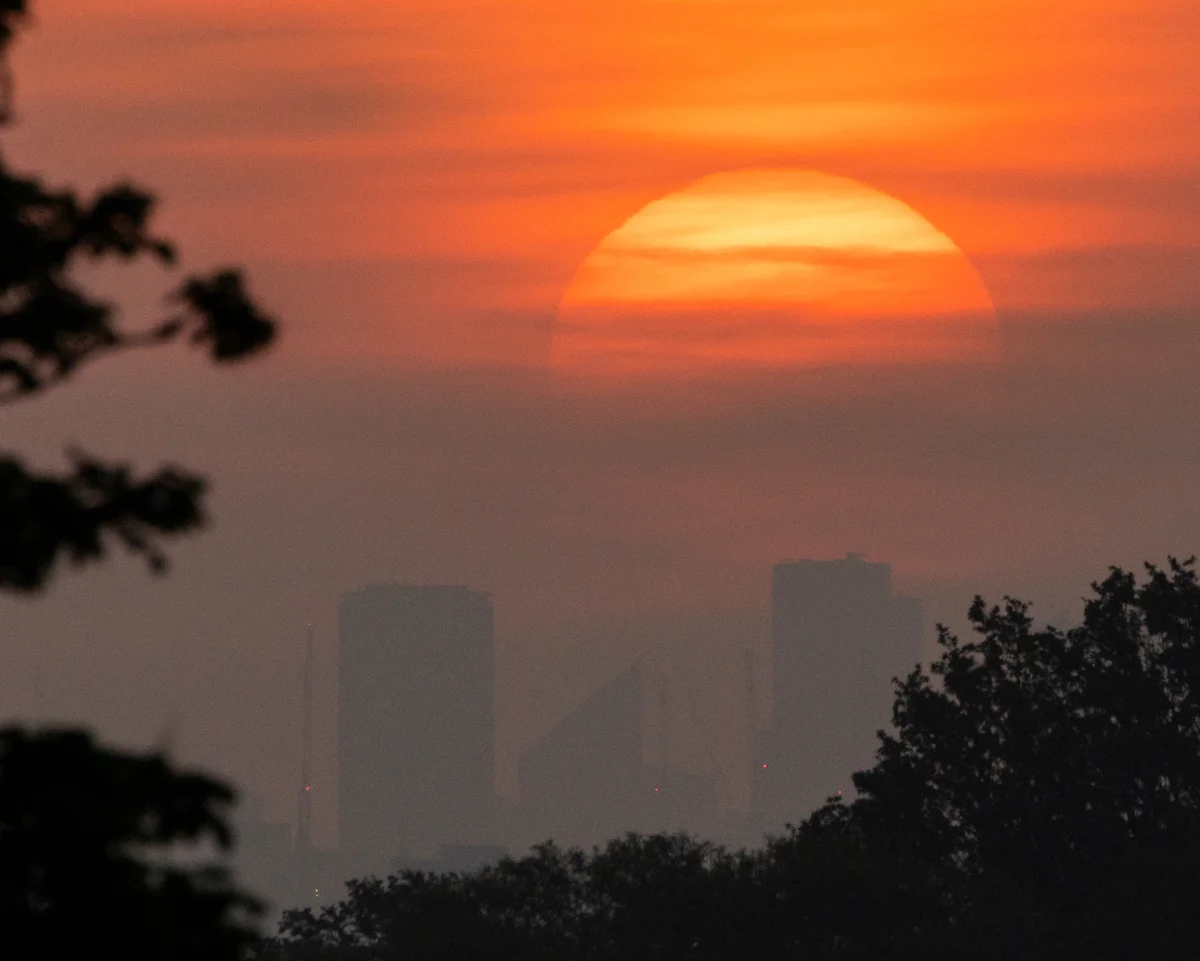
The Met Office has extended its amber weather warning for heat across much of South East England through the end of the week, as a persistent high-pressure system continues to draw warm air northward from the continent. Temperatures in parts of Kent, Sussex, Surrey and Greater London are expected to reach 34 degrees Celsius by Thursday afternoon, with overnight lows remaining above 18 degrees in urban areas, offering little respite for those without air conditioning.
Advertisement
The amber alert, the second-highest tier in the Met Office’s warning system, indicates that the heat is likely to have a significant impact on health, transport and infrastructure. The UK Health Security Agency has issued parallel guidance, urging vulnerable groups — the elderly, young children, those with chronic respiratory or cardiovascular conditions, and people taking certain medications — to take particular precautions.
For most healthy adults, the heat is an inconvenience rather than a danger. But for the estimated four million Britons aged 75 and over, many of whom live alone in poorly insulated housing, prolonged heat poses a genuine risk. The NHS has activated its heatwave plan, with hospitals and GP surgeries in the affected regions stepping up outreach to vulnerable patients. Ambulance services have reported a modest increase in call-outs related to dehydration and heat exhaustion, though nothing approaching the levels seen during the extreme heat events of 2022.
Local authorities have responded with a mixture of practical measures and public information campaigns. Several London boroughs have opened cooling centres in libraries, community halls and leisure centres, offering air-conditioned spaces, free water and a place to rest during the hottest hours of the day. The centres have been particularly well used by older residents, many of whom have reported feeling isolated and anxious during previous heat events.
Transport operators have issued their own advisories. Network Rail has imposed temporary speed restrictions on some lines, as steel rails can expand and buckle in sustained heat. Several train operators have advised passengers to carry water and to expect possible delays, particularly on routes through the South East. The London Underground, much of which runs in unventilated Victorian tunnels, has experienced platform temperatures exceeding 35 degrees, prompting Transport for London to distribute free water bottles at the busiest stations.
The agricultural sector is also feeling the strain. The National Farmers’ Union has reported that livestock farmers in the affected regions are implementing additional welfare measures, including increased water provision, shade structures and adjusted feeding schedules to avoid the hottest parts of the day. Arable farmers, meanwhile, are watching their crops with increasing anxiety, as the lack of significant rainfall over the past three weeks has begun to stress cereal and vegetable plantings.