

The broader context of British motorsport is one of quiet dominance. The so-called “Motorsport Valley,” the cluster of engineering firms, research centres and specialist suppliers concentrated in the Oxfordshire-Northamptonshire corridor, employs more than 40,000 people and generates annual revenues exceeding £10 billion. Seven of the ten Formula One teams are based in the UK, and the country’s expertise in advanced engineering, aerodynamics and data analytics is exported worldwide. The Grand Prix is the shop window, but the industry behind it is a year-round economic engine.
Advertisement
The 2026 regulations have also accelerated the sport’s transition toward sustainability. The new power units run on 100 per cent sustainable fuel, and the electrical component of the hybrid system has been significantly enhanced, with drivers now able to deploy up to 350 kilowatts of electrical power per lap. The visual and auditory experience has changed — the cars are slightly quieter, slightly more angular — but the fundamental appeal of watching the fastest drivers in the world wrestle machines at 200 miles per hour through Copse and Stowe remains undiminished.
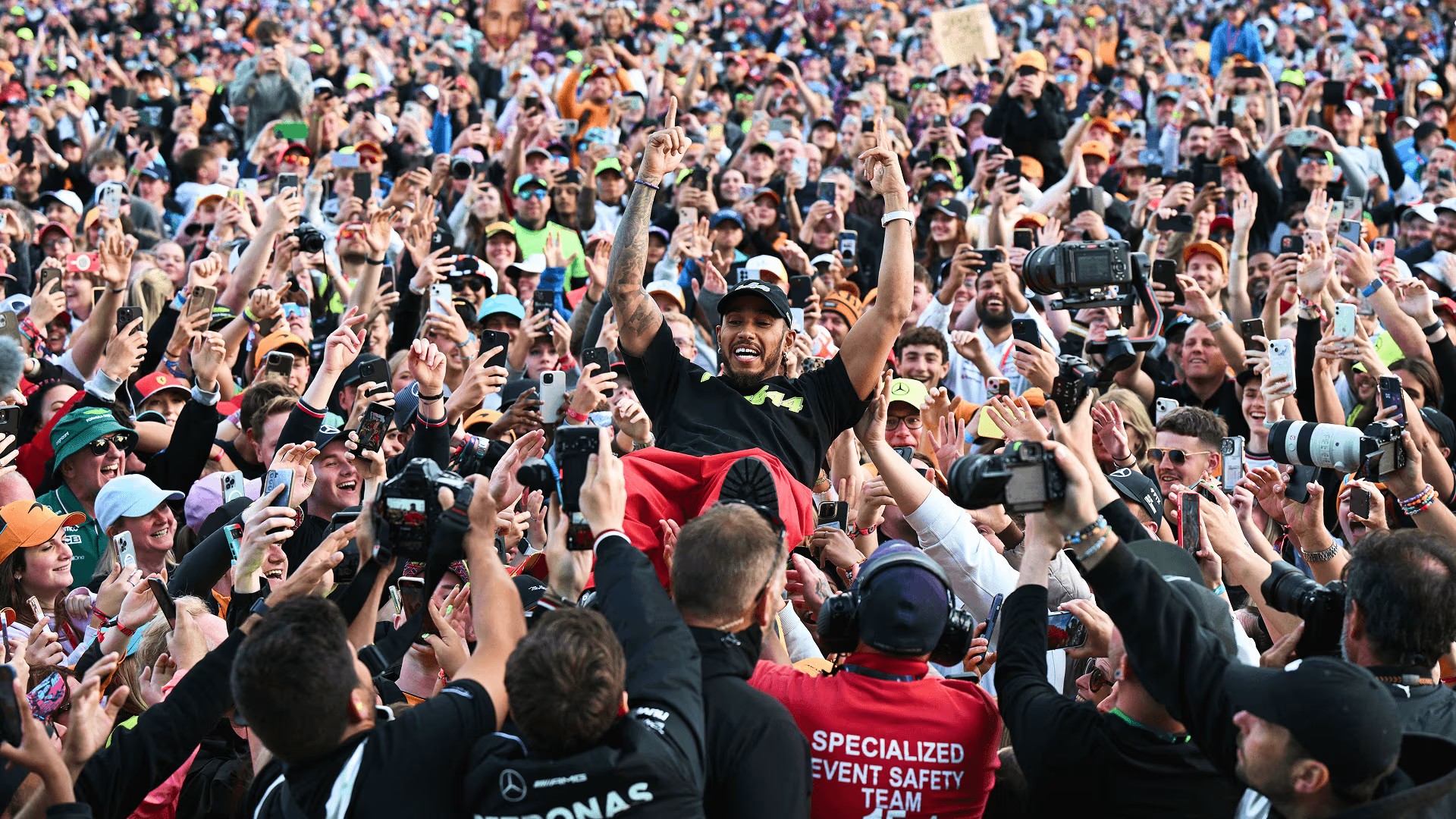
For the fans, the weekend was a celebration as much as a sporting event. The campsite culture that defines the Silverstone experience was in full evidence, with thousands of spectators pitching tents in the surrounding fields from Wednesday onward. The atmosphere was festive, good-humoured and, in the best British tradition, resilient in the face of the weather. When the rain arrived on Friday evening, the campers simply raised their glasses, pulled on their waterproofs and carried on.
The record attendance is a testament to the enduring appeal of Formula One in Britain, a country that has produced more world champions than any other and that regards the sport not as a niche pursuit but as a national institution. The BBC’s coverage attracted a peak audience of 8.5 million viewers for the race, and the highlights programme drew a further 4 million. In a fragmented media landscape, the Grand Prix remains one of the few events capable of gathering a mass audience around a single, shared experience.
As the teams packed up their motorhomes and the circuit fell quiet on Monday morning, the organisers were already looking ahead. The 2027 British Grand Prix is provisionally scheduled for the second weekend in July, and the early indications are that demand for tickets will be even stronger. Silverstone, it seems, is not merely surviving in the modern Formula One calendar. It is thriving. And on the evidence of this weekend, it intends to go on roaring for a long time yet.